Kyushu road trip itinerary: 17 days of volcanoes, onsen, and gorges
This Kyushu road trip itinerary covers 17 days by car: Fukuoka, Nagasaki, Kagoshima, Mt Aso, Takachiho Gorge, and Beppu.
My partner and I had already done the usual Tokyo–Osaka–Kyoto circuit. This time we wanted the natural side of Japan: hiking, hot springs, volcanoes. After some research and a few friend recommendations, Kyushu kept coming up. It is famous for its onsen towns and ramen, but also for volcanic landscapes that most tourists skip. We plotted out what we wanted to do, and Kyushu fit.
We went by car. Half the places we wanted to reach, like volcanic trailheads, national parks, and coastal onsen towns, needed one anyway. For Fukuoka city itself, a Suica card was enough.
We planned a relaxed trip: something to do most days, with free afternoons and evenings to walk around or stay in. What I did not expect was how much the volcanoes would hit me. They ended up as the highlight of the trip.
These are the full details from our April–May 2025 trip. For car rental, insurance, tolls, and total costs, read the Kyushu road trip guide.
The route at a glance
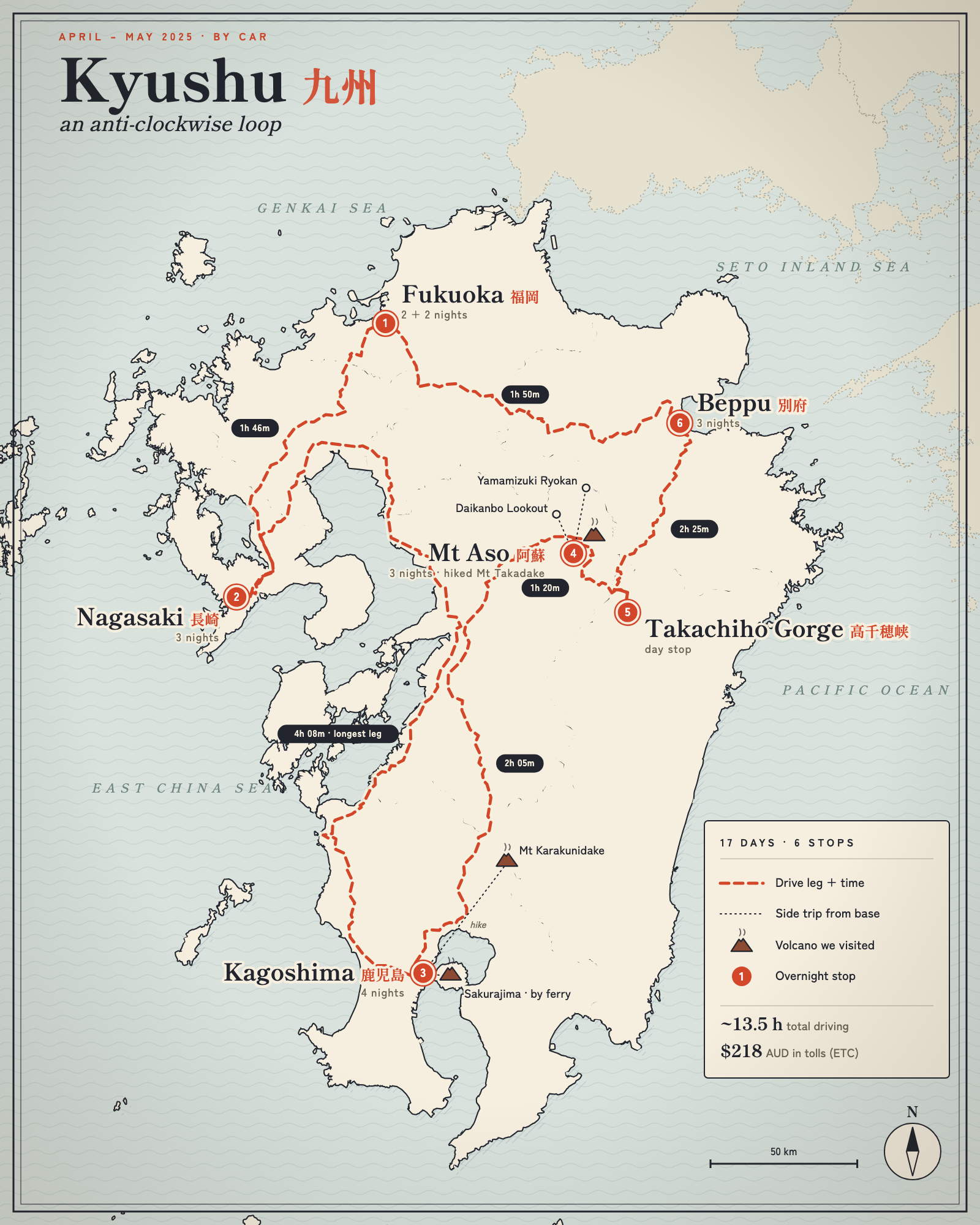
We drove an anti-clockwise loop around Kyushu, starting and ending in Fukuoka. It made sense. Fukuoka is the major hub and where the flights land, and the same pickup and drop-off point kept the car management simple.
| Leg | Drive time | Highlights |
|---|---|---|
| Fukuoka → Nagasaki | 1h 46min | Atomic Bomb Museum, Mt Inasa night views |
| Nagasaki → Kagoshima | 4h 8min | Longest leg. Sakurajima, Kirishima National Park |
| Kagoshima → Mt Aso | 2h 5min | Volcano hiking, ryokan stay |
| Mt Aso → Takachiho Gorge | 1h 20min | Gorge boats |
| Takachiho → Beppu | 2h 25min | Straight drive |
| Beppu → Fukuoka | 1h 50min | Final leg, car drop-off at airport |
| Total | ~13.5 hours of driving | Over 17 days |
No single leg is longer than about four hours, and most are under two. The longest, Nagasaki to Kagoshima, was the only one that felt like a proper road trip day.
I wouldn't change the order if I did it again. The anti-clockwise loop felt natural, and ending back in Fukuoka gave us a couple of low-key days to wind down before flying home.
Fukuoka (2 nights, plus 2 nights at the end)
We split our Fukuoka time: two nights at the start (APA Hotel Hakata Ekihigashi, near Hakata Station, $325.93) and two nights at the end (WeBase Hostel, $414.43) after dropping off the car. Getting around the city was easy with a Suica card on the buses and subway, but we ended up renting bikes for most of it. Way more fun than walking, and Fukuoka is flat enough that cycling everywhere just works.
Picking up the car and driving out of Fukuoka was nerve-wracking. The signs were in Japanese, and yellow lights flashed in the middle of the road, which I had never seen in Australia. I drove very slowly at times because I did not know what was going on.
Ramen capital
Fukuoka is the birthplace of tonkotsu ramen, and the pork bone broth smell fills the streets. We hit two spots worth mentioning.
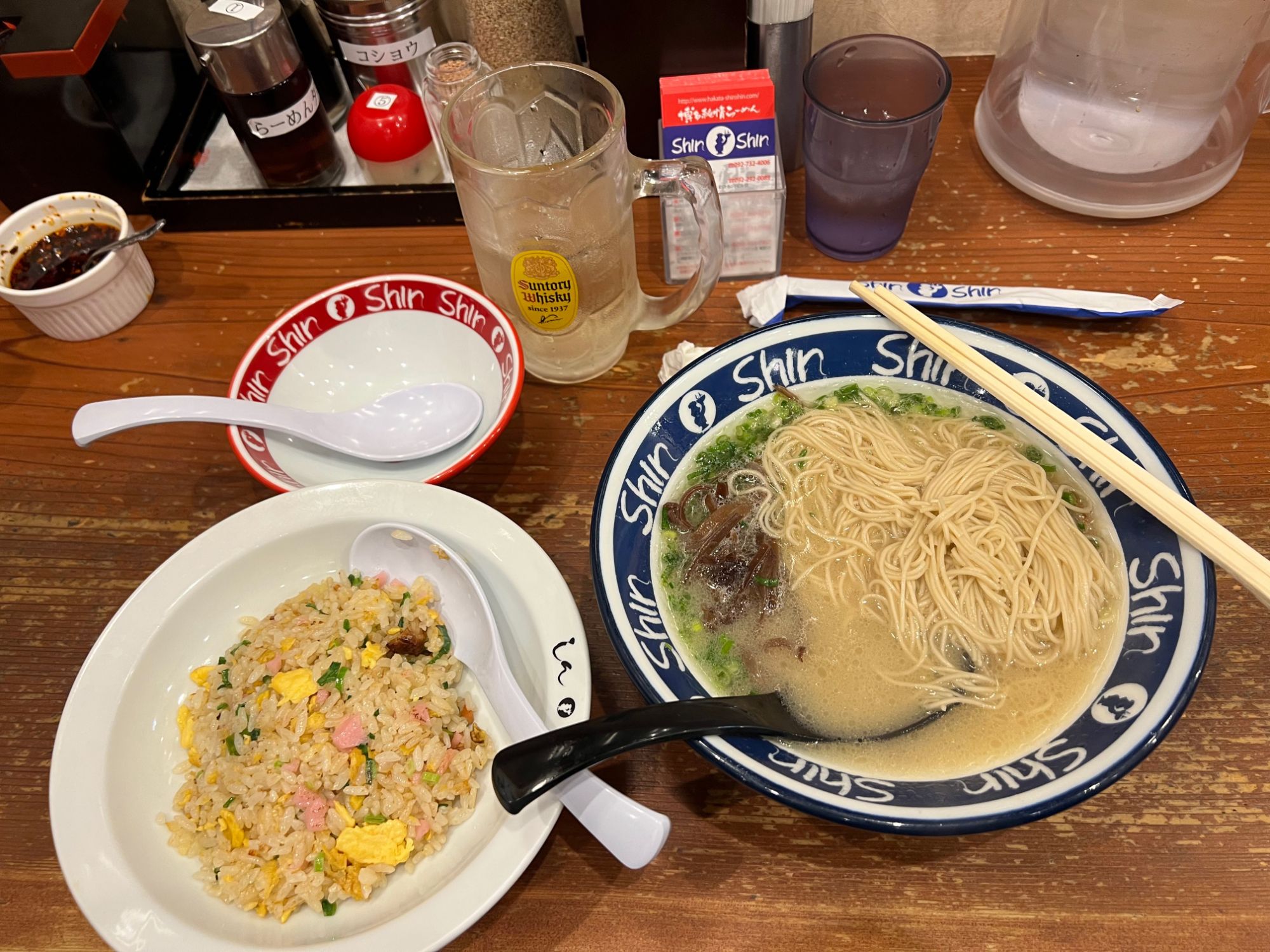
Shin Shin Ramen is the best ramen I've ever had. There's a line, and it gets longer at peak hours (6–9pm), but it moves. I ordered a bowl of ramen and fried rice, and it was incredible.
Hakata Issou Honten. I saw this place on our first leg and the line was insane, so I skipped it. On the last leg, I decided I had to try it no matter how long the wait. The smell coming out of the restaurant was funky in a good way, that deep tonkotsu aroma. I waited about two hours. The verdict: it was good, but not amazing. Shin Shin was better, and I chastised myself for the wait. Definitely not worth two hours.
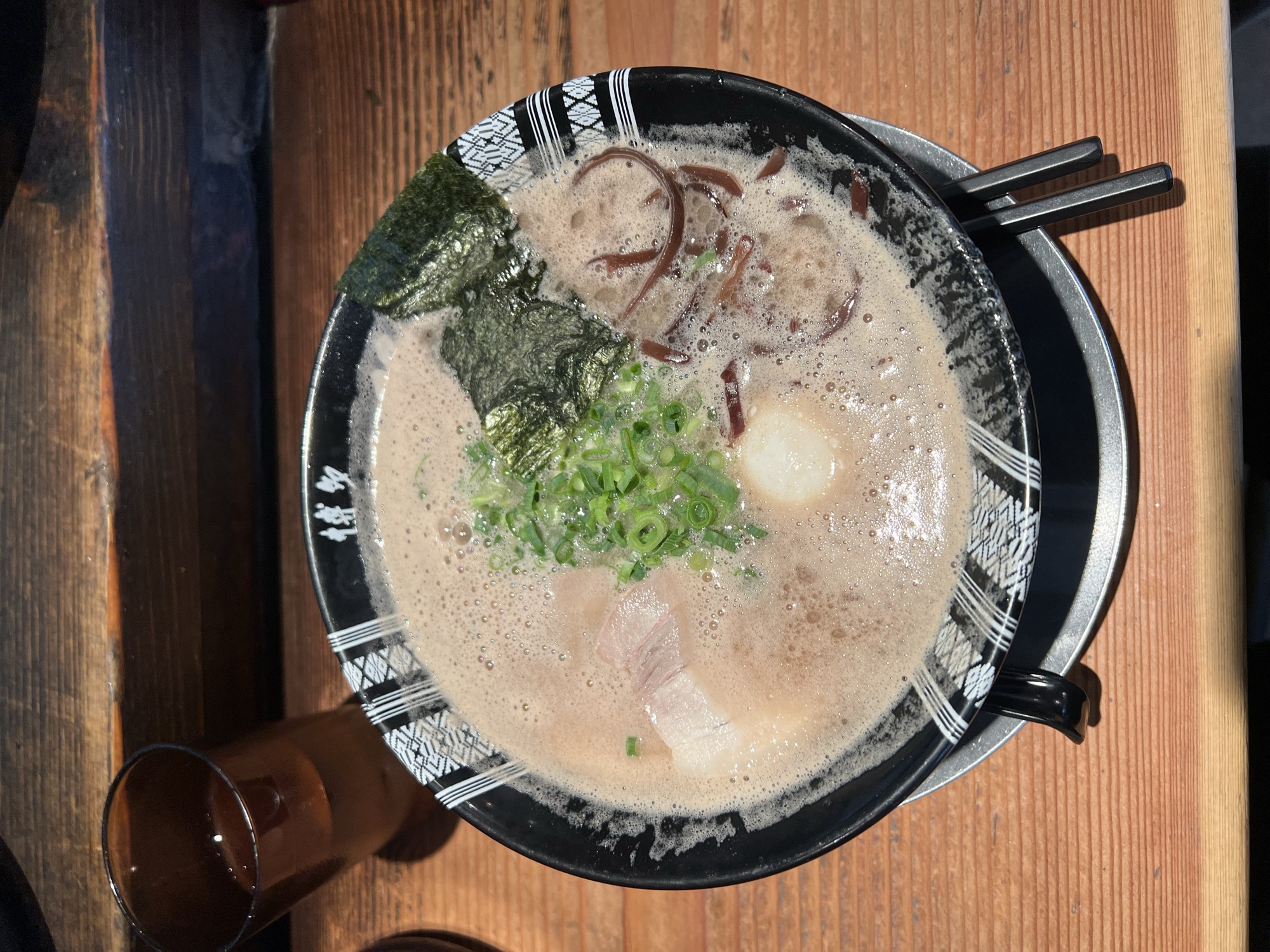
A tip I learned from people in the Issou line: when they ask how firm you want your noodles, say barikata (バリカタ). It's the firmest option: al dente, chewy, the way locals order it. If you like noodles with bite, order it.
Yatai (food stalls)
The yatai along the river are a must, but they're generally very touristy. I deliberately chose the least busy one I could find. I attempted to converse with the stall owner in my broken Japanese (I was learning at the time), and he tried to chat back briefly before realising I was a tourist and giving me my space while I took photos of the food he was barbecuing.
One thing to know: you have to order a drink before you eat. That's the yatai culture. I had my first highball, which is Japanese whisky with carbonated soft drink, like a Sprite mixer, and I was buzzed after one glass. Felt like he put a lot of whisky in there. Which made the whole experience even better.
The food was amazing. It felt like Japanese culture in a way a sit-down restaurant does not quite capture.
Hakata Dontaku Port Festival
Our visit overlapped with the Hakata Dontaku Port Festival, one of Fukuoka's biggest events. It runs on May 3 and 4, during Golden Week, with parades through the city centre, dance performances, and stages around Tenjin and Hakata. It draws more than two million people, according to Fukuoka Now. If you like a lively atmosphere, May is a good time to visit. I'm not big on huge crowds, but it was impressive to see.
What I thought of Fukuoka
Fukuoka is a modern city: big, lively, and crowded. It felt like other major Japanese cities, and on its own I would not call it special. Kyushu as a whole, though, might be my favourite part of Japan. I prefer the nature side, and everything outside Fukuoka delivered it in a way that Tokyo, Osaka, and Kyoto, as fun as they are, do not. Japanese nature is one of the best travel experiences I have had, and Kyushu is where you find it.
Nagasaki (3 nights)
Driving from Fukuoka: 1 hour 46 minutes. We stayed at Hotel Monterey Nagasaki ($340.55). The hotel has Dutch-influenced architecture, which fits Nagasaki's history as Japan's old trading port with the Netherlands.
Parking at the hotel
Parking was its own adventure. At Hotel Monterey Nagasaki, the car park was inside the building, but getting to it was a nightmare. The road was a one-way street, extremely tight, with cars that had to keep flowing or the whole thing would get blocked. Amelia had to jump out, run to reception to ask about parking, while I drove round and round the block because I couldn't stop. Once reception was notified, someone came outside to physically guide me into the parking lot. It was one of those car-elevator systems where your car goes underground and gets stacked on double-decker racks. I remember thinking: what would I have done if Amelia wasn't here? Probably parked somewhere else entirely and figured it out later.
Atomic Bomb Museum
Sobering and pretty sad. Entry is only 200 yen (see the Nagasaki tourism page), and I recommend it. I learned a lot about the history that I didn't know. One thing shocked me: Nagasaki was never the original target. The museum is thorough on Japan in World War II, and it stays with you after you leave. The nearby Peace Park and Memorial Hall are worth a walk too.
Mount Inasa
The city skyline view from the top was good, though not the most memorable night view I've seen. Most people take the cable car up, but Amelia and I walked. It wasn't too hard, and we grabbed a few photos at the summit. Worth it if you want the exercise, but the cable car is fine too.
Ramen Hiiragi
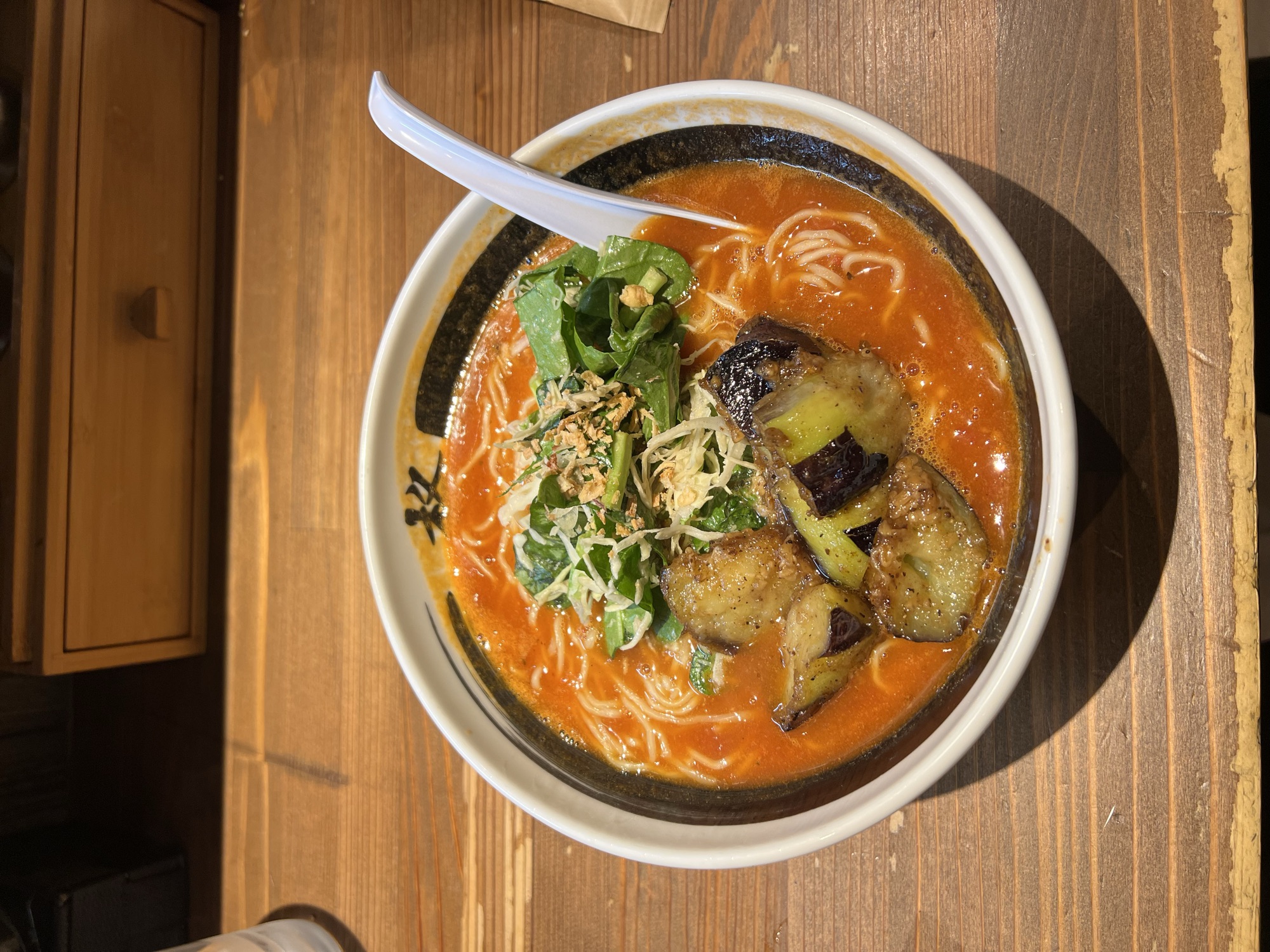
Nagasaki had a ramen find: Ramen Hiiragi, which does a tomato soup ramen. It was unlike any ramen I'd had before. Try it if you're in the area.
What I thought of Nagasaki
Nagasaki was quite a quiet place compared to Fukuoka. It had some unique spots, like the Dutch Slope, Meganebashi Bridge, the riverside walks, and Chinatown, but it wasn't the most memorable stop on the trip for me. Maybe I didn't give it enough time.
Kagoshima (4 nights)
Driving from Nagasaki: 4 hours 8 minutes. This was the longest leg of the trip. We stayed at Henna Hotel in the city centre ($454.70). The roads there were busy, and the parking prices were time-based and not straightforward at all. The language barrier didn't help. I think we only understood how the pricing worked after we'd already left. And it wasn't cheap.
Driving into Kagoshima
As we drove south, we saw a huge natural structure in the distance. As we got closer, it turned out to be a volcano: Sakurajima, sitting right next to Kagoshima across the bay. I'd never seen anything that big. It had this aura to it. Strangely scary, driving into the vicinity of something that massive and active. It made you feel small, like you were walking into danger.
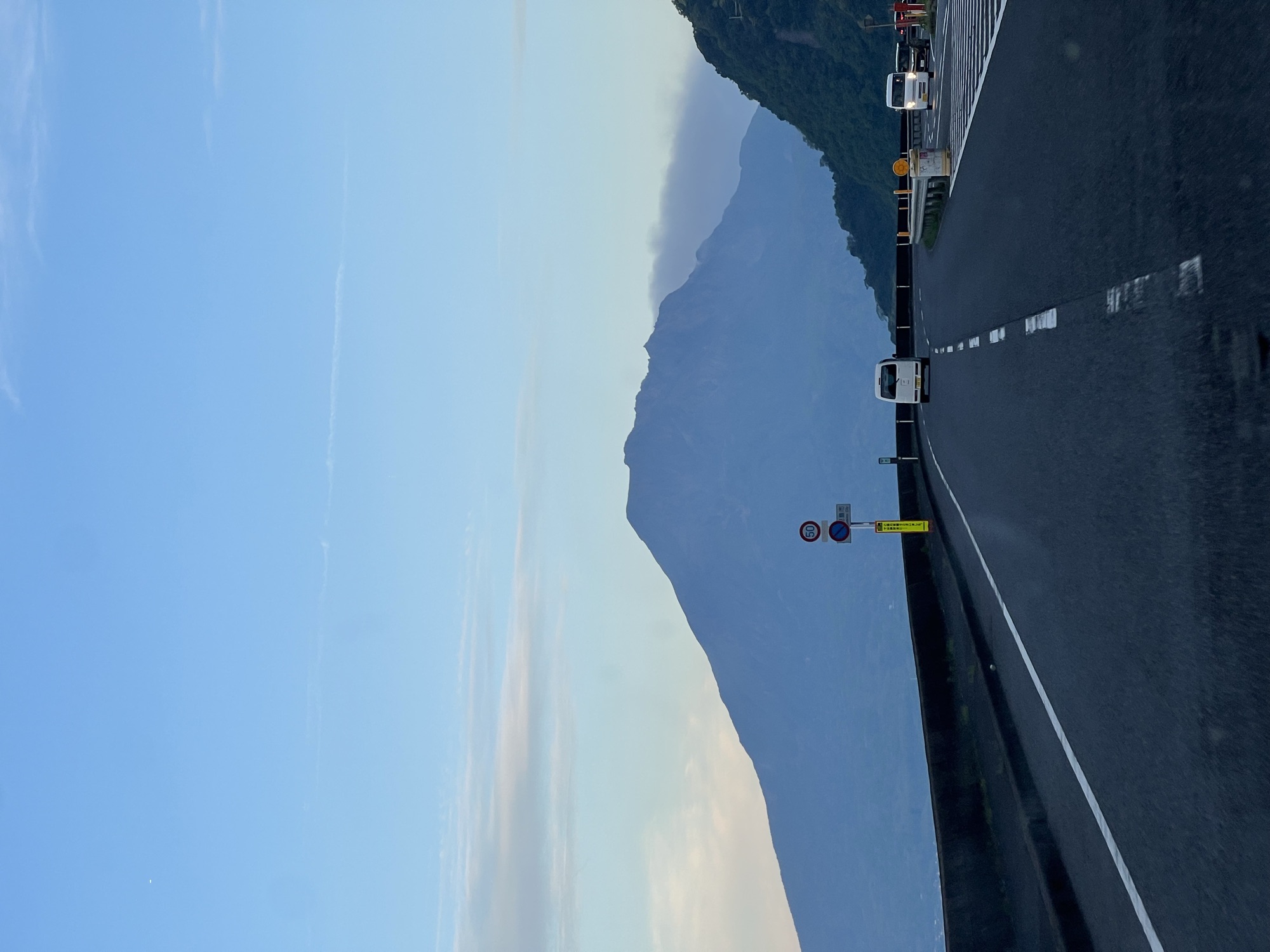
Sakurajima
We visited Sakurajima island by ferry and got some great photos, but always from a distance. The foot onsen on the island was fine, but not memorable enough to write home about. Kagoshima's real highlight was inland.
Hiking Mt Karakunidake (Kirishima National Park)
This was the highlight of the entire trip.
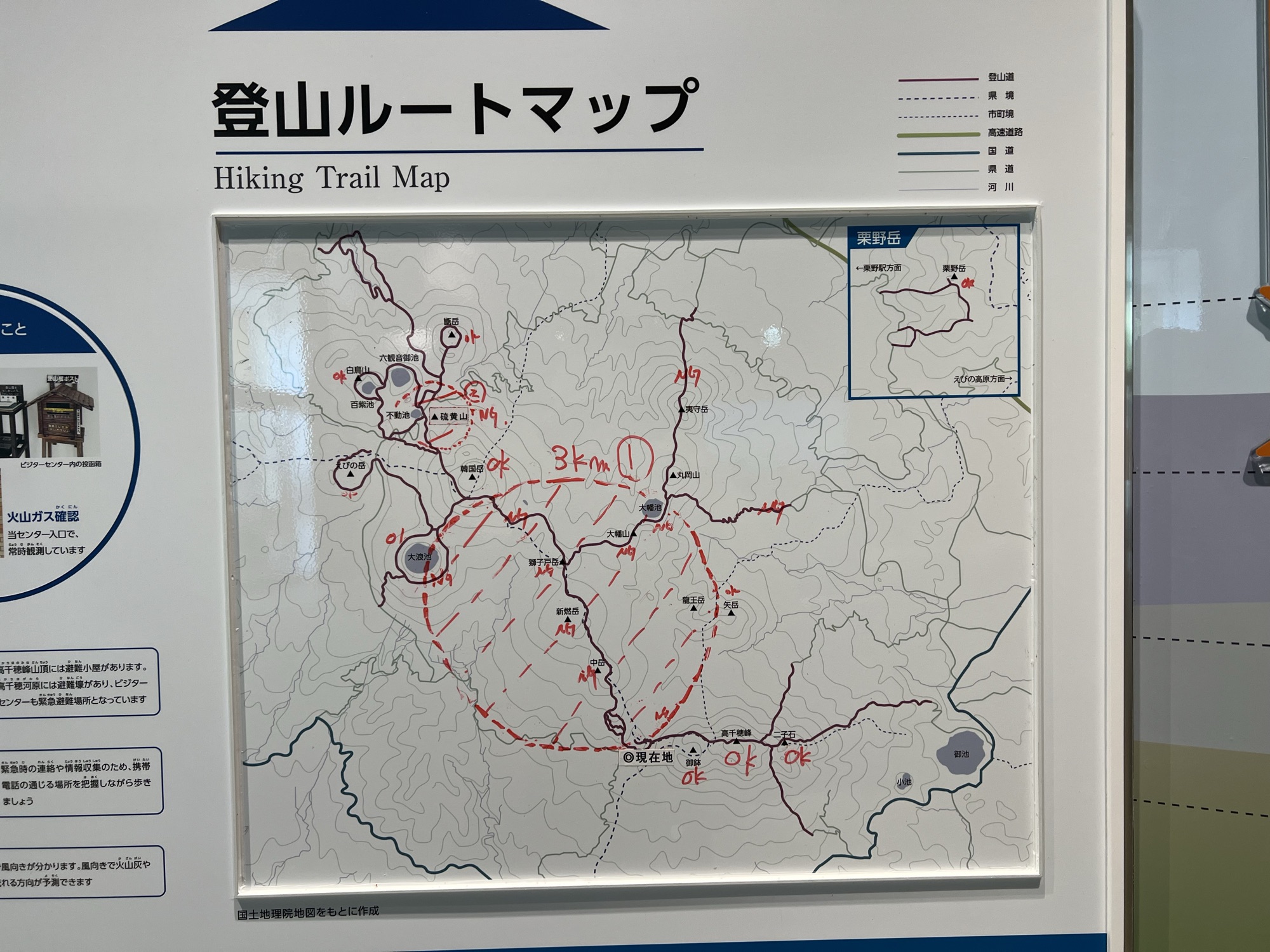
The morning started slow. We were undecided on whether to even attempt the hike, because we'd seen reports that a lot of the trails in Kirishima were closed due to volcanic activity. We went to an information centre in the city first, which gave us enough clarity to know that some trails might be open. From there, we drove to the information centre inside Kirishima National Park itself. That's where we could see exactly which trails were open and which were closed. Some of the other volcanoes, Mt Shinmoedake and Mt Shishikodake, were off limits. But Karakunidake, the highest peak in the park, was open.
The centre in the park wasn't sophisticated. I don't think it was even manned when we arrived. But there was a whiteboard showing the current radius of volcanic activity and which trails were safe to climb. That's the information that matters, and it gets updated daily.
The centre also had historical information on the formation of the volcanoes. The most useful thing was a 3D map replica of the Kirishima ranges. Seeing mountain ranges on a top-down 2D map is one thing. Seeing the terrain and the peak of each volcano on a physical 3D model gave us a completely different sense of perspective. It helped us understand exactly where we'd be hiking and what we were looking at.
We didn't start from the very bottom. We picked up the trail at a certain point, crossed past Onami Pond, and headed for the peak.
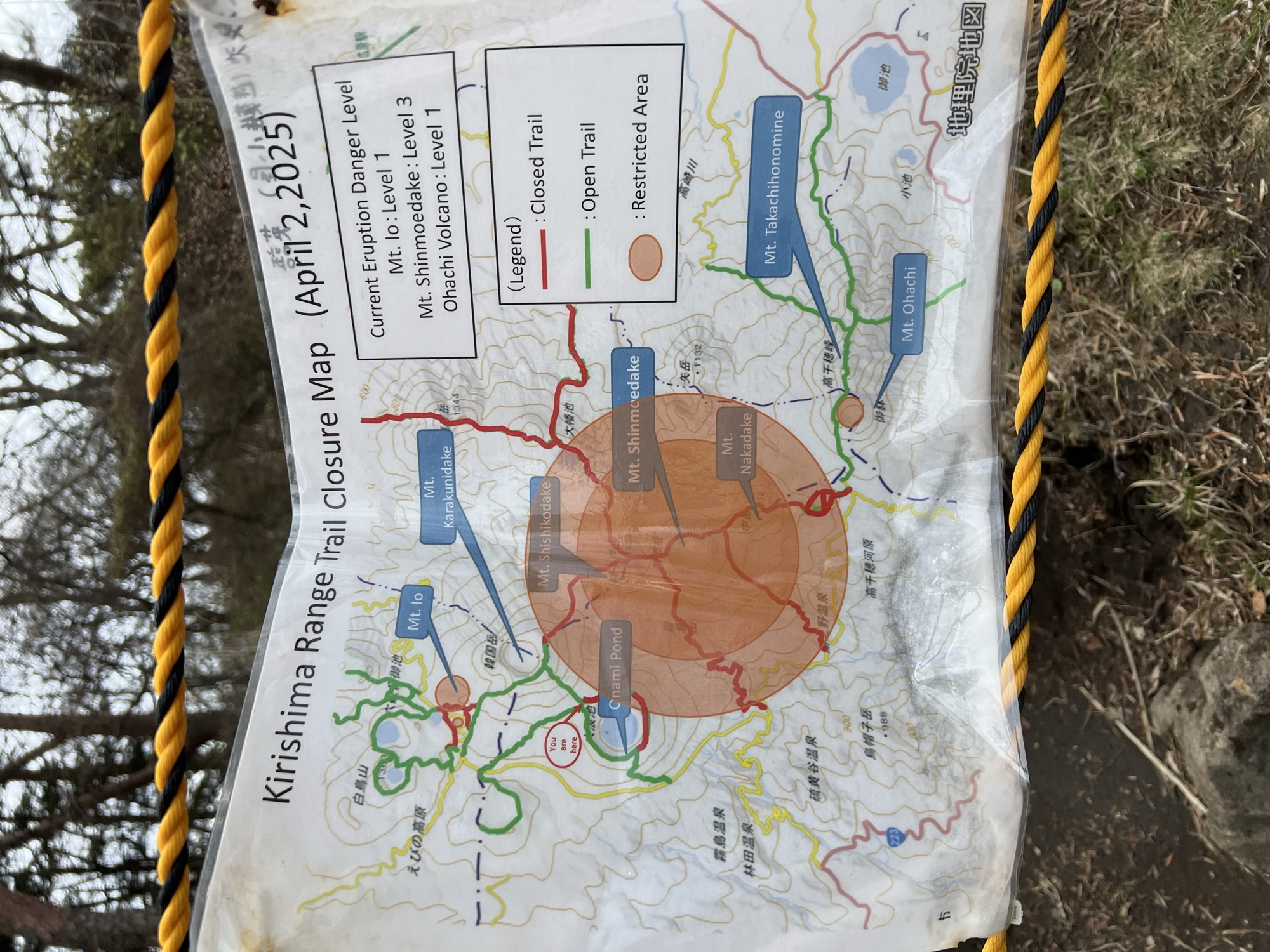
At first, we weren't sure we were going to make it. It was getting late and the sun was starting to set, and we didn't want to hike back in the dark. But as we kept going, it became too late to turn back. The trail was not dangerous. We had seen the beauty of Onami Pond, seen Karakuni's peak from a distance, and knew that if we didn't push for it, we'd regret it.
Finally, after what felt like hours, we made it to the top.
There was no one else around, given the late hour. It was super windy. The 360-degree view of the mountain ranges ran out in every direction. Some of the best views I've ever seen, anywhere, on any trip.
We took some photos quickly, took it all in, then made our descent. By the time we got back to the car, it was already dark. Exhilarating. I'll remember that hike for a long time.
The shift from city to nature
Kagoshima was where the trip changed. We knew what a city looked like, but we could not guess what beauty Kyushu had to offer until we saw it for ourselves. I made a mental note after Karakunidake: wherever we travel next, always make time for nature.
For how to check which volcano trails are open, see the volcano hiking section of the guide.
Mt Aso: ryokan stay and volcano hikes (3 nights)
After Kagoshima, we drove north into the Aso region. This is where the trip slowed down. Less city, more ryokan, more time staring at scenery. We spent one night at Yamamizuki Ryokan and two nights at Hotel Foresta.
The drive in, and the wild boar
We were driving to our Mt Aso accommodation at night, around 10pm. The roads were dark and winding, with barely any street lamps. For the most part it was an easy drive. This was "country" for us, with lots of open road and land between the occasional restaurant or shop. We were about 80% of the way there.
Then the winding bits started. We drove down a curved road and couldn't see what was on the other side. Suddenly, something appeared in our lane. I couldn't make it out clearly. My first thought was some kind of baboon, because of the shape of it. It had this protruding rear end. The animal was in the middle of the left lane, walking off to the side of the road.
I swerved instinctively towards the centre of the road. My line was going to miss it completely, if the animal kept moving to the left. I could see it start to run towards the left side of the road. And then it did a complete 180 and ran straight into our car.
BAM. Front left bumper.
We sat there in shock, car stopped in the middle of a dark mountain road. I felt a wave of anxiety and frustration. I thought I'd just ruined our entire holiday. All I could think about was having to return the car, somehow find a new one, whether we could even get one. My mind was spiralling. I knew Amelia was shaken too, but we weren't injured. It was a minor hit, at least for us.
We eventually got out of the car. It felt like ages before we did. As we stepped out, I could hear an animal shrieking, and the sound was unmistakable. A pig squealing. I thought: this animal is dead on the road and I'm going to have to drag its body to the side. But what if it was still alive? It could be dangerous. It might attack.
We walked around to the front of the car. Nothing there. No animal anywhere. But the damage was obvious. The headlight was dangling out, and the bumper was hanging by a thread, etched with marks we couldn't make out in the dark. We looked around, couldn't see anything, and didn't want to stay around to find out. We drove off slowly and eventually reached our accommodation, weary but still buzzing from the adrenaline.
We checked in and told the story to the receptionist via Google Translate. She confirmed it was most probably a wild boar, which are common around those parts. We were pretty fortunate it didn't try to attack us when we stepped out of the car.
Once we got to our room, we immediately messaged the rental car company on WhatsApp. This was crucial: I needed to tell them exactly what happened and figure out next steps. We sent them photos, explained the situation, and then went to sleep because it was already late and there was nothing else we could do.
Next morning, we chatted with the rental company, but they couldn't send out a replacement car due to availability. After some discussion, Amelia and I decided to see if we could patch it up ourselves. The receptionist at our accommodation was incredibly kind. She lent us duct tape and the tools we needed, and we made it work. The bumper was no longer dangling. The headlight was back in its spot. It wasn't pretty, but it was functional.
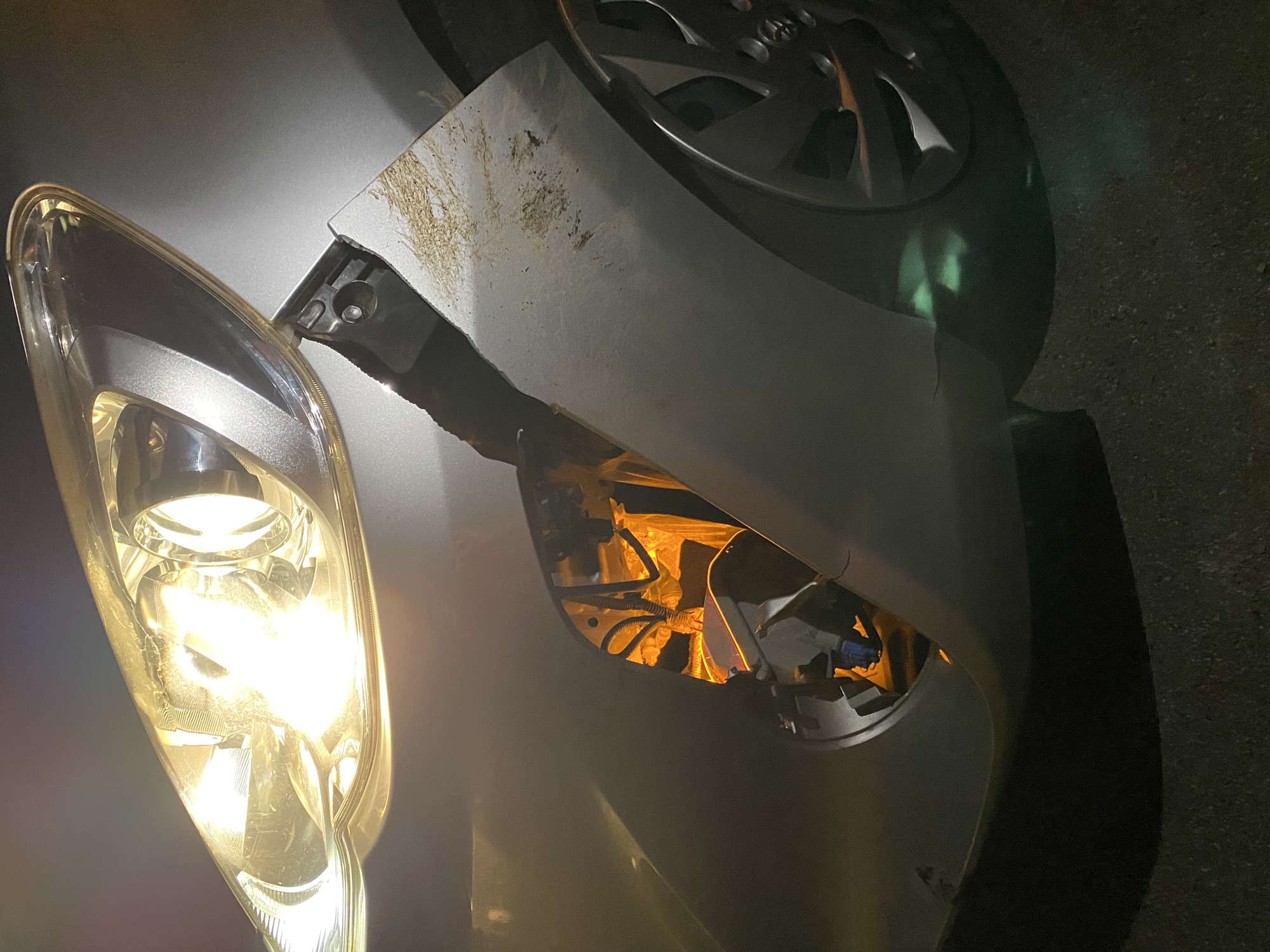
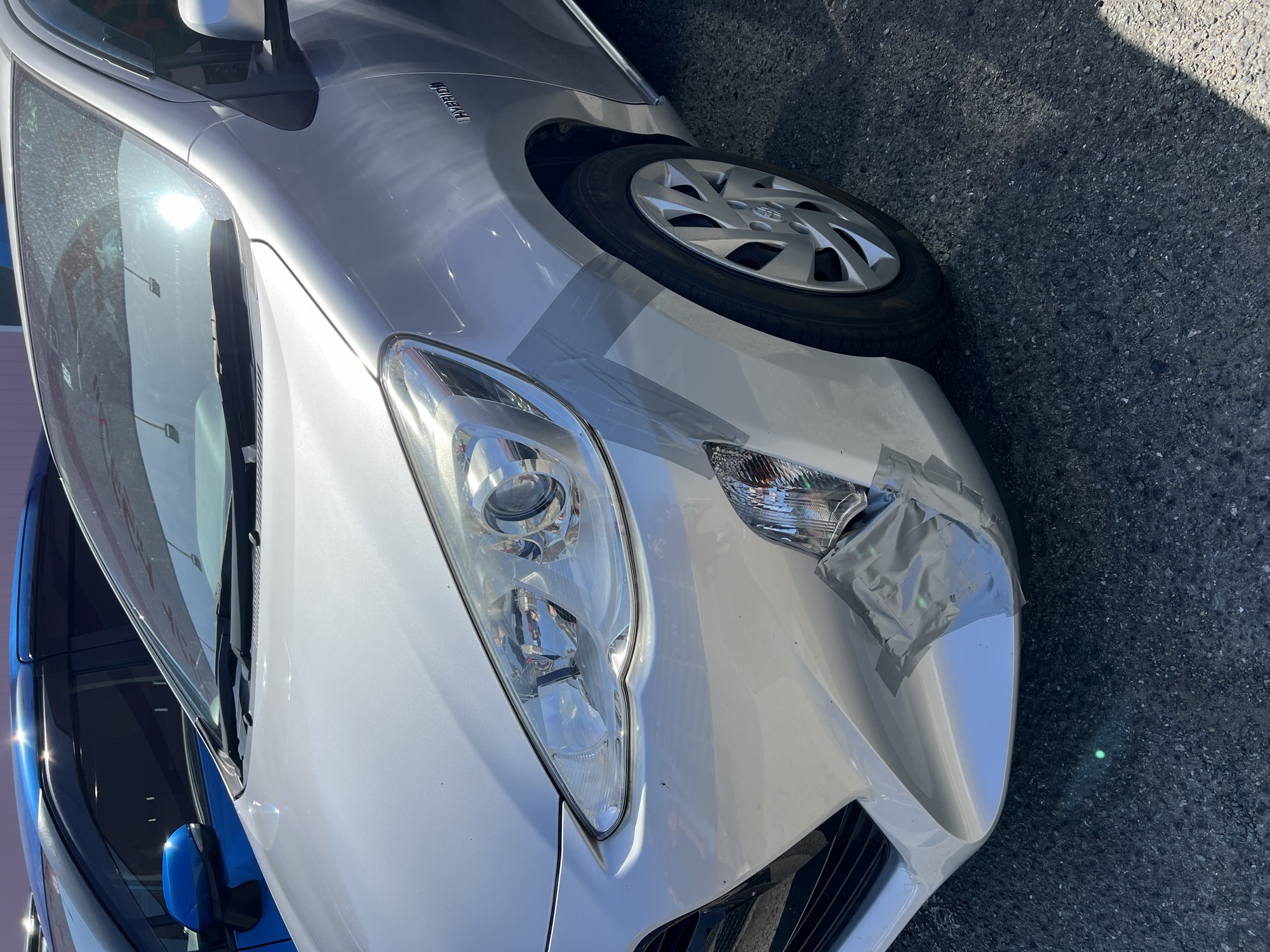
This was huge. It meant we could continue the trip as planned and deal with the insurance after we got home. At the end of the trip we paid the excess when we returned the car, then claimed it back. The guide explains the insurance and the claim step by step.
The whole experience was an emotional rollercoaster: the shock of the impact, the stress of thinking the holiday was ruined, the duct-tape repair, and finally the relief when the claim went through. I view it as part of the adventure now.
Yamamizuki Ryokan
We skipped Kurokawa Onsen town itself. Instead we spent one night at Yamamizuki, and that was the experience.
The road in was narrow and winding, through green countryside. We passed a few other ryokan signs, so this whole stretch of road is clearly ryokan territory. By the time we turned into Yamamizuki, we already had a sense we were somewhere different.
Check-in set the tone. Staff had already clocked our car as a guest arrival and had a spot reserved for us. Someone came out to usher us into our own dedicated parking space. Then a staff member physically carried our bags in. I'm used to hauling my own luggage, so this caught me off guard in a good way. Inside, check-in itself was simple: hand over your credit card, and they walk you through onsen access and hours, dinner time (a full meal they prepare and serve you), and the rest of the house rules.
The room was unlike anywhere I'd ever stayed. Very authentic to Japanese culture. The futon and beds were put away during the day, so the big living space in the middle of the room opened up. All around that central room was a walkway that connected through to the dining area at the far end. If you imagine a square with one middle layer and one outer layer: the middle layer was the room, the outer layer was the walkway, one edge of that outer layer was the dining area, and another edge was the toilet. No bathrooms in the room; you're expected to take a bath in the onsen. We poked around for a bed and found none, until we opened a cupboard and found the futons folded away inside. We figured we'd have to set them up ourselves after dinner.
Directly outside the dining room, you overlooked a quiet river. You could hear the water gushing over the stones. It was calming, like a scene from a movie.
Before dinner, we went for a walk around the grounds. The whole property is laid out like a small village, with winding stone footpaths connecting each guest room, tucked in among the trees. It gave off a real Ghibli-film feel. It is one of the most serene places I've stayed. You can see why people pay for this.
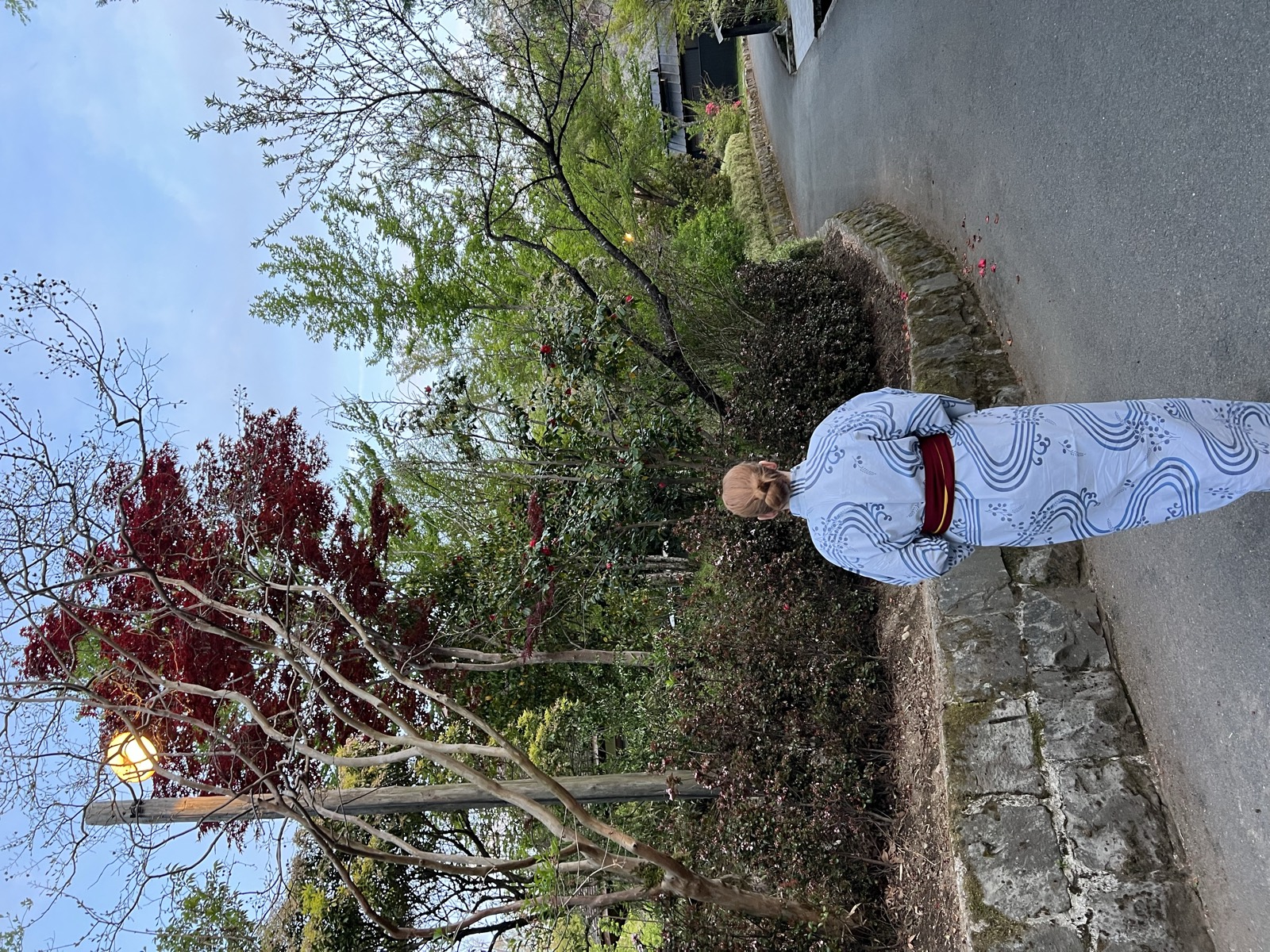
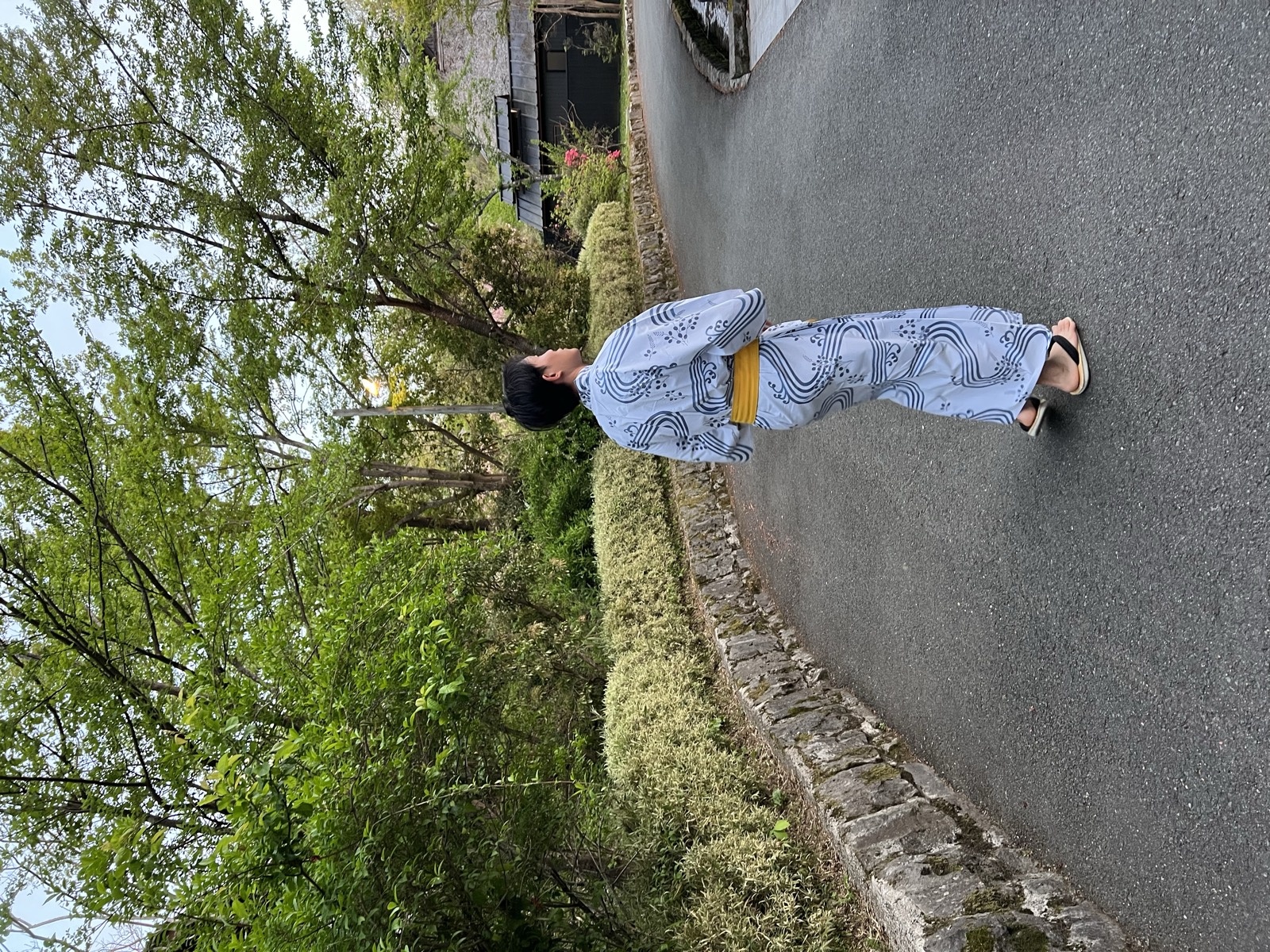
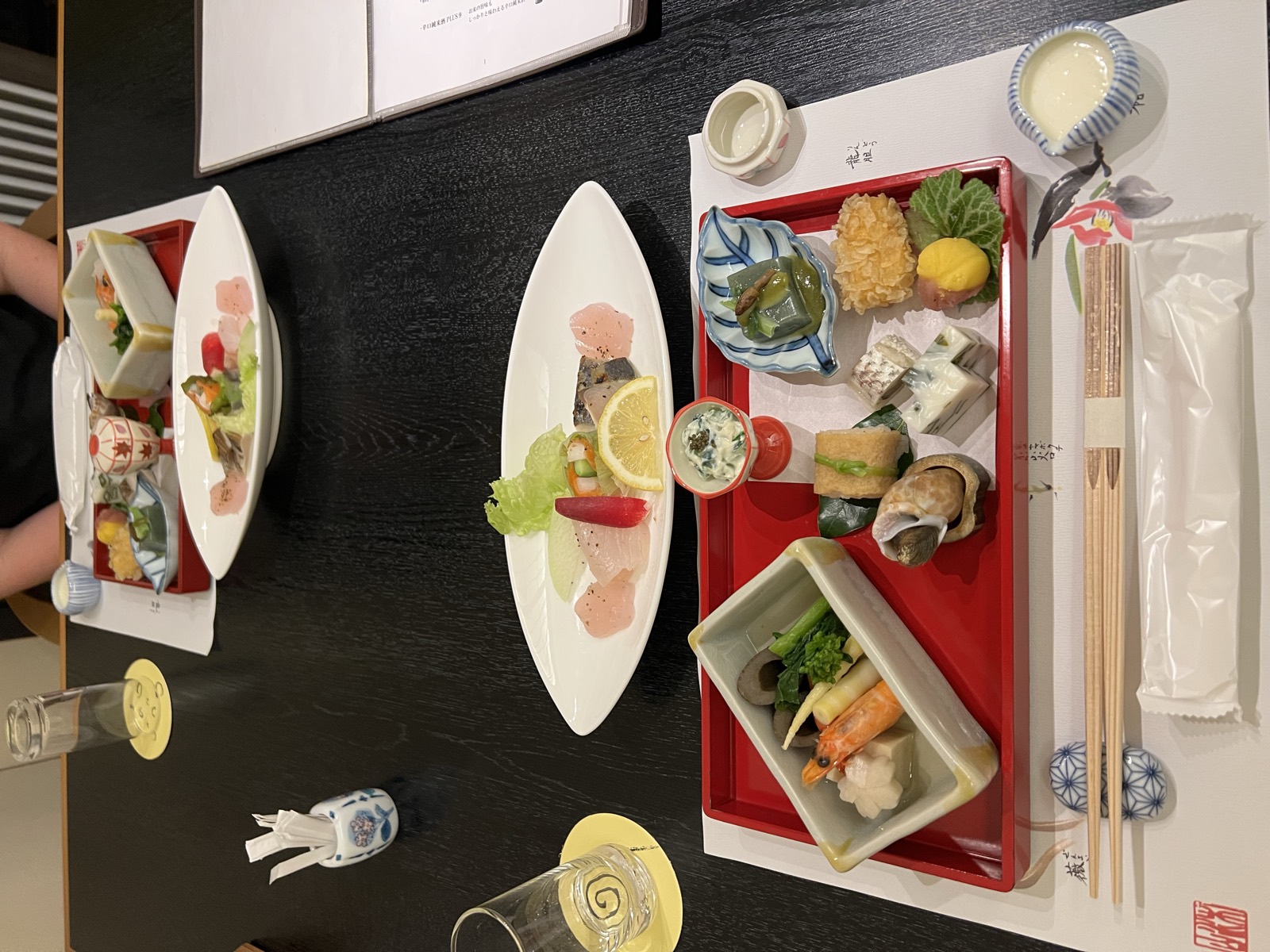
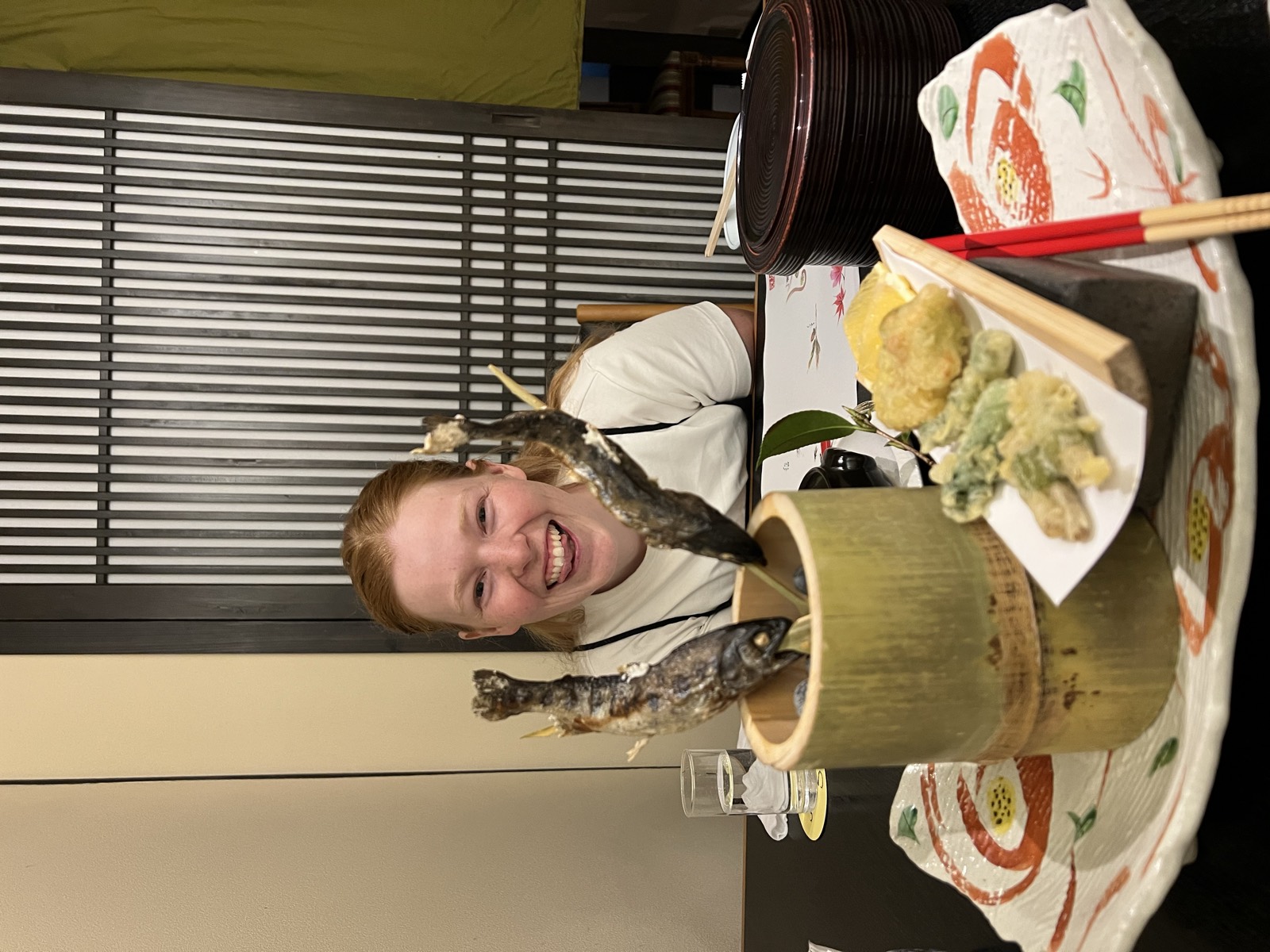
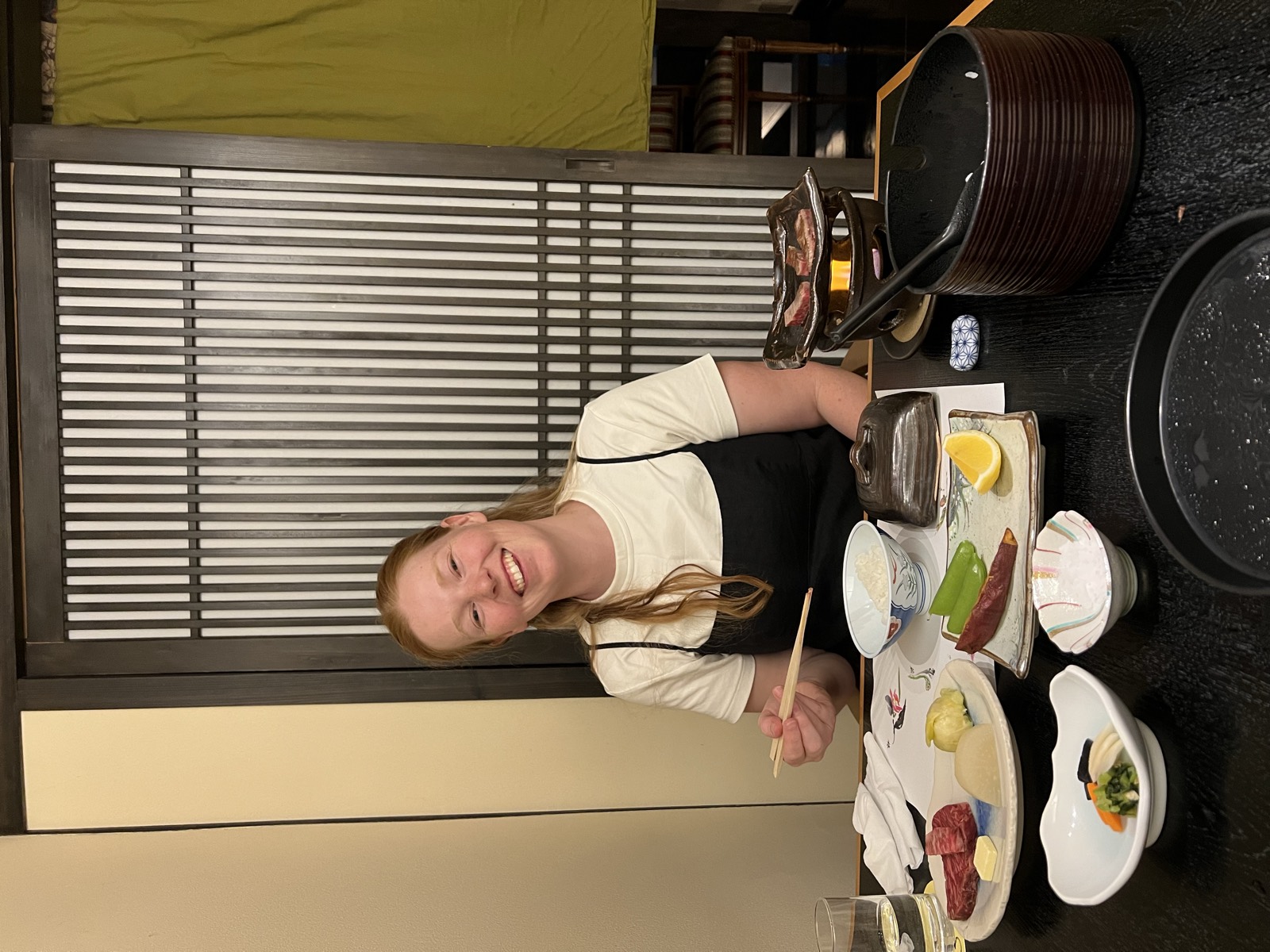
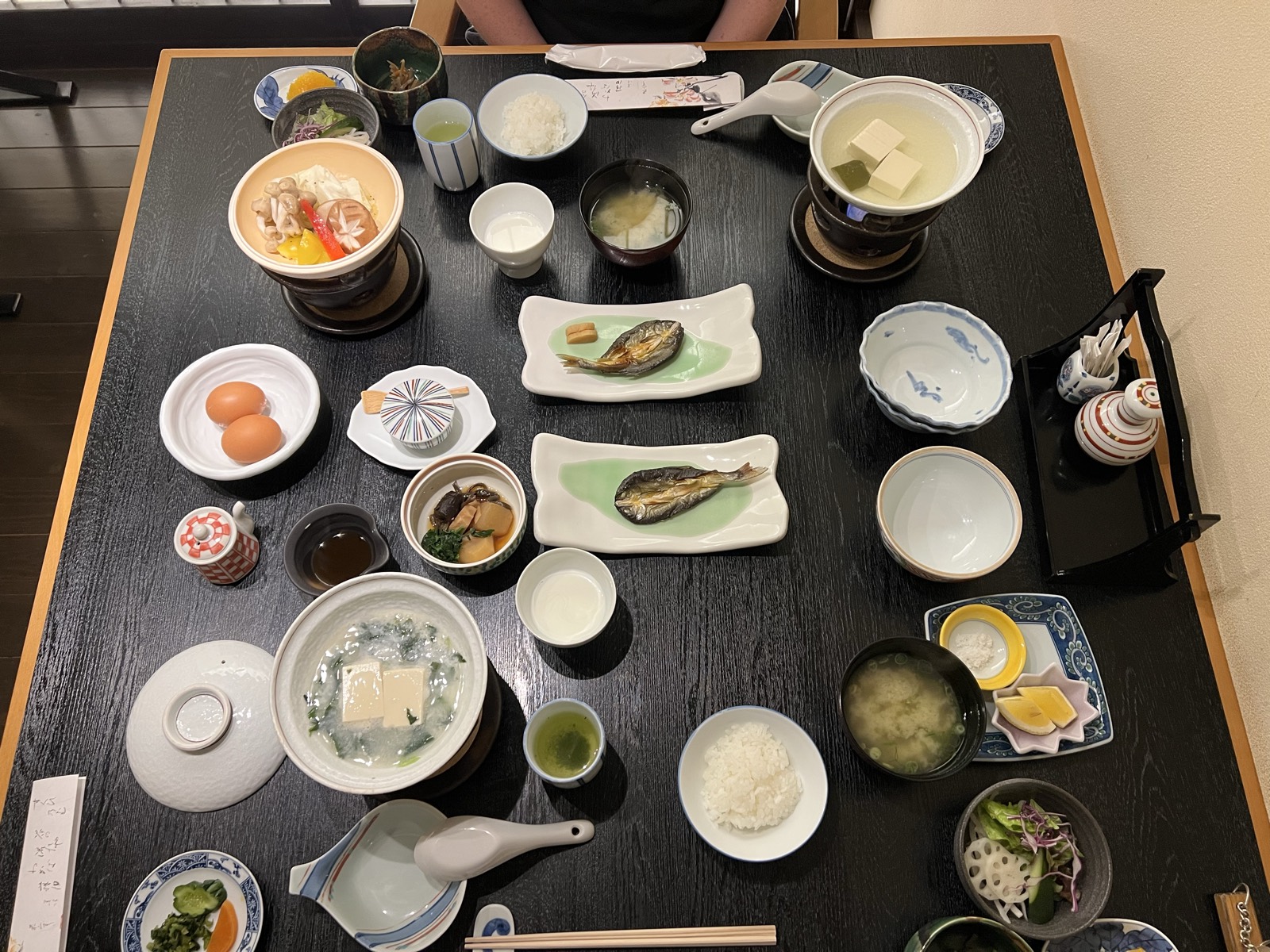
The kaiseki meal was interesting. It was not mind blowing, but the dishes were unusual. The standout for me was the freshness: vegetables, tofu, and fish, plus a clear vegetable broth and an assortment of side dishes. The main event was wagyu beef, which you sear yourself on a hot stone plate at the table. It melted in the mouth. My partner is coeliac, so I told them in advance she could not have gluten, and they gave her a more curated menu without making it a big deal. The service was good and they were very accommodating. As a self-confessed foodie, I appreciated the craft that went into it, even though it didn't blow my mind.
The onsen itself was really nice: a mix of indoor and outdoor baths, the traditional rinse-before-you-enter routine, and an inviting, traditional feel. Since my partner and I are different genders, we each explored our own side, and both were worth it. My partner, who's a bigger fan of onsens than I am, enjoyed it even more.
We got back to the room after dinner and found the futons already made up into beds for us. Staff had done it while we were eating. We hadn't expected that, and it was a nice touch to end the night on.
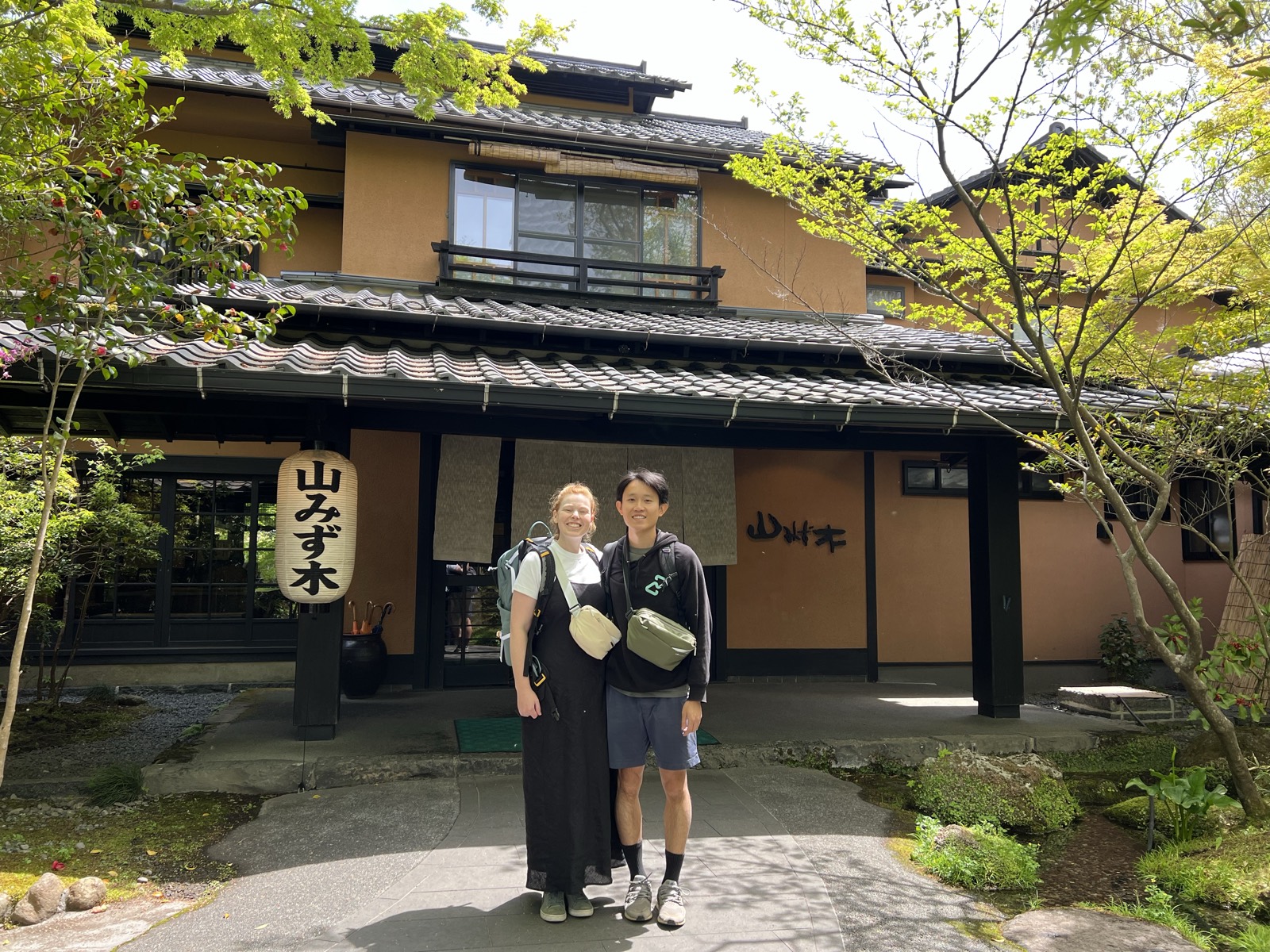
Was it worth 48,400 yen (~$483 AUD) for the two of us, one night? Yes. We did it as a single splurge in the middle of the trip rather than a full ryokan-every-night kind of thing, and that felt like the right balance. If you're not Japanese, staying in a ryokan like this, even once, is a special experience. I'd recommend it to anyone doing Kyushu.
Hiking Mt Takadake (高岳山)
We also hiked Mt Takadake in the Aso-Kuju ranges. This was different from Karakunidake. It was much more touristy, with plenty of other hikers around, all geared up and ready to go. There are many hikes to choose from in the Aso area, and you just have to pick one based on what's open and what appeals to you.
Takadake took us about 3 hours to complete. It was a solid hike but didn't have that same solitary, end-of-the-world feeling that Karakunidake gave us.
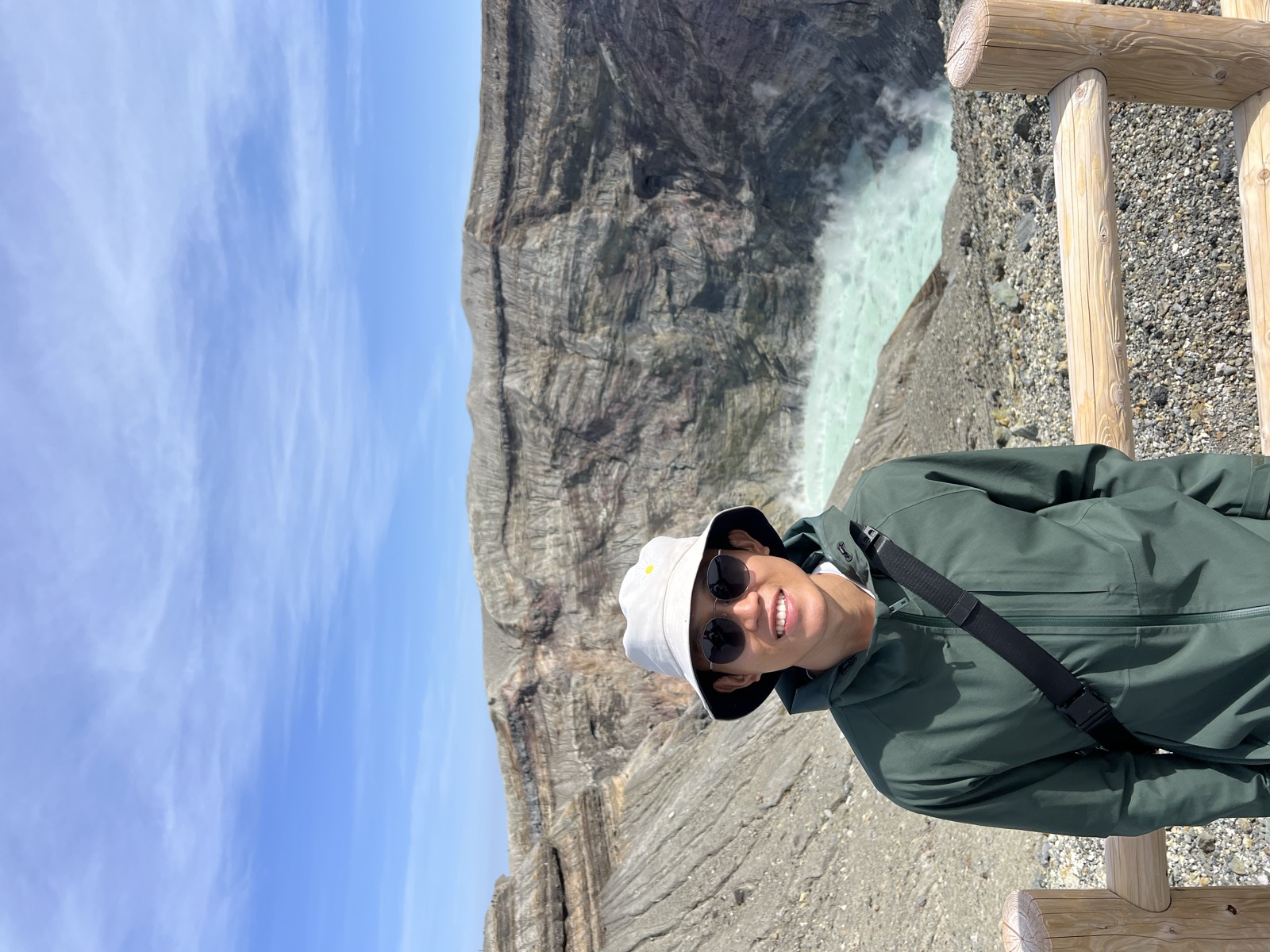
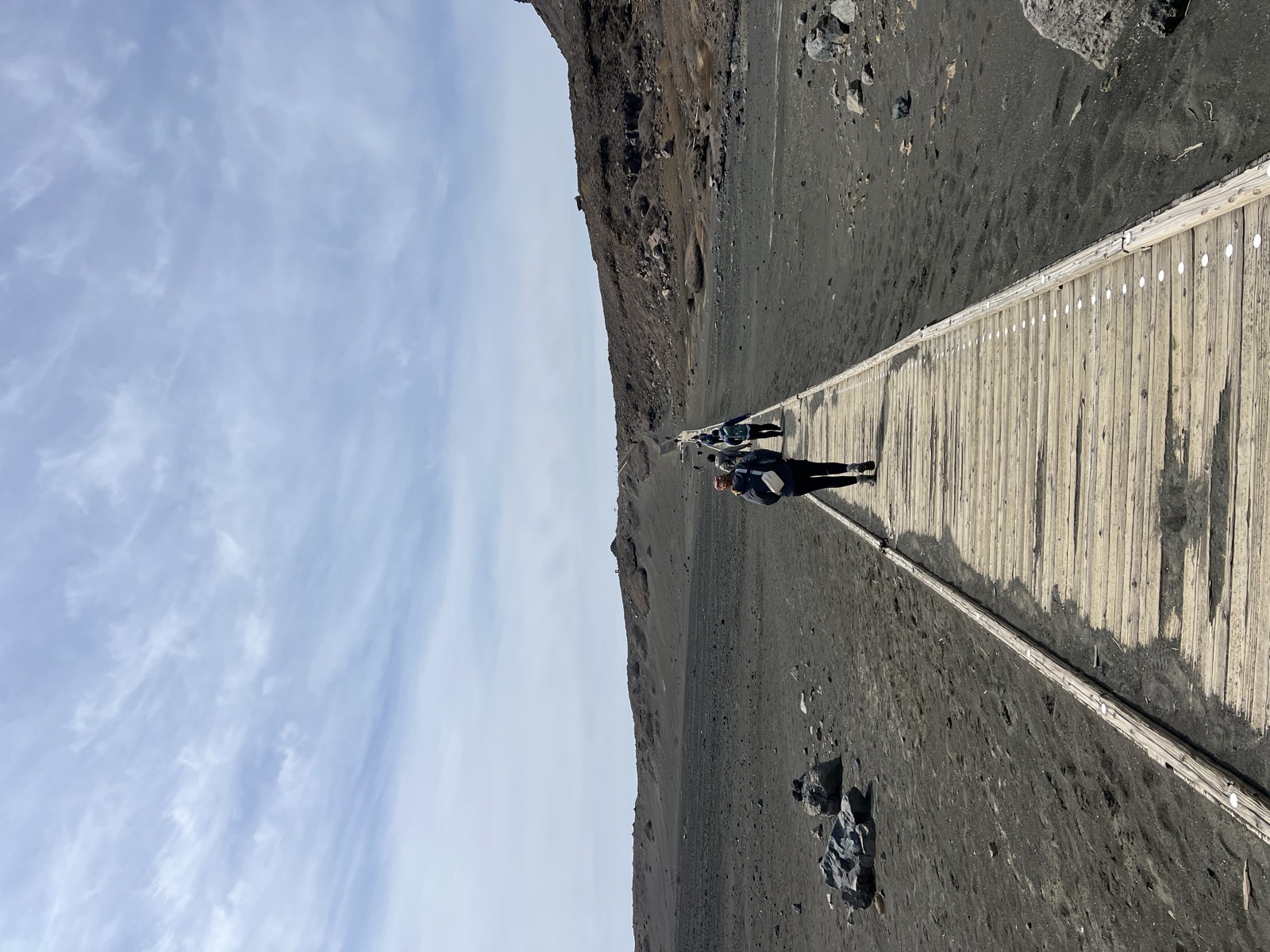
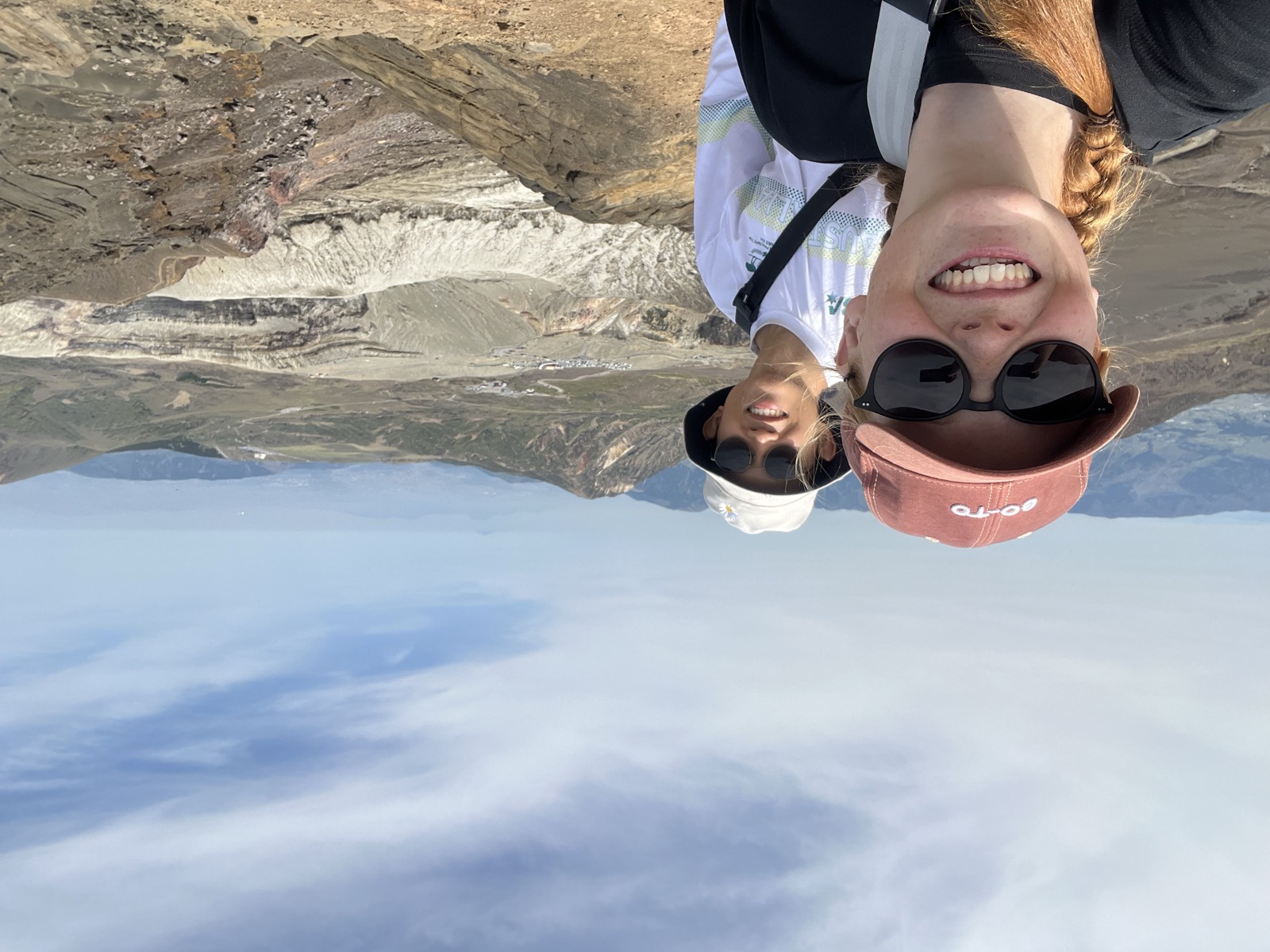
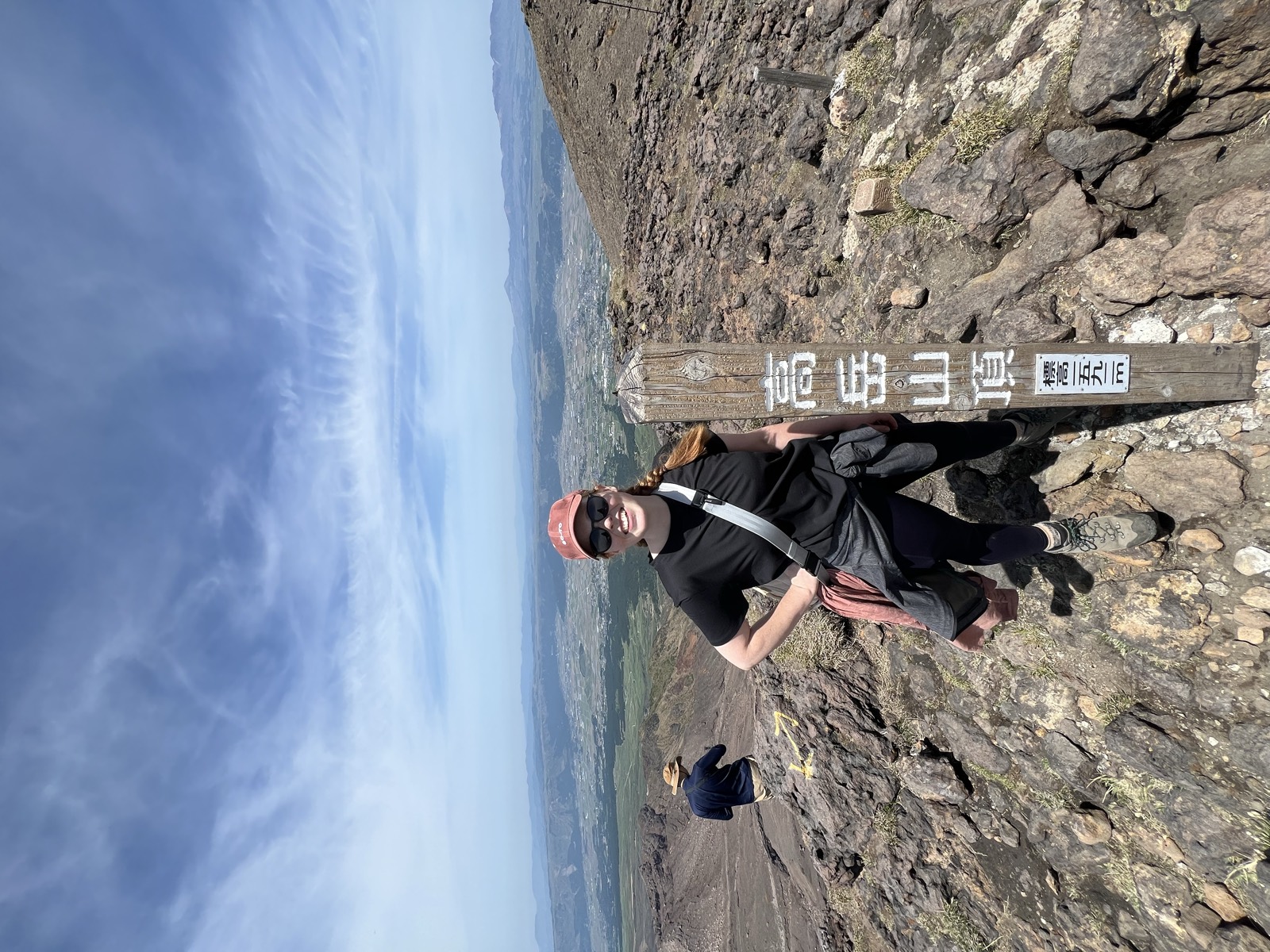
The main options from the Kurasenri Observatory starting point are:
- Kishimadake: looks down into the caldera bowl
- Eboshidake: straight-on volcano view
- Mt Takadake (高岳山): the one we did, highest peak in the Aso caldera
Which ones are available depends entirely on the volcanic activity that day. Check the information centre, see what's open, and go from there.
Daikanbo Lookout
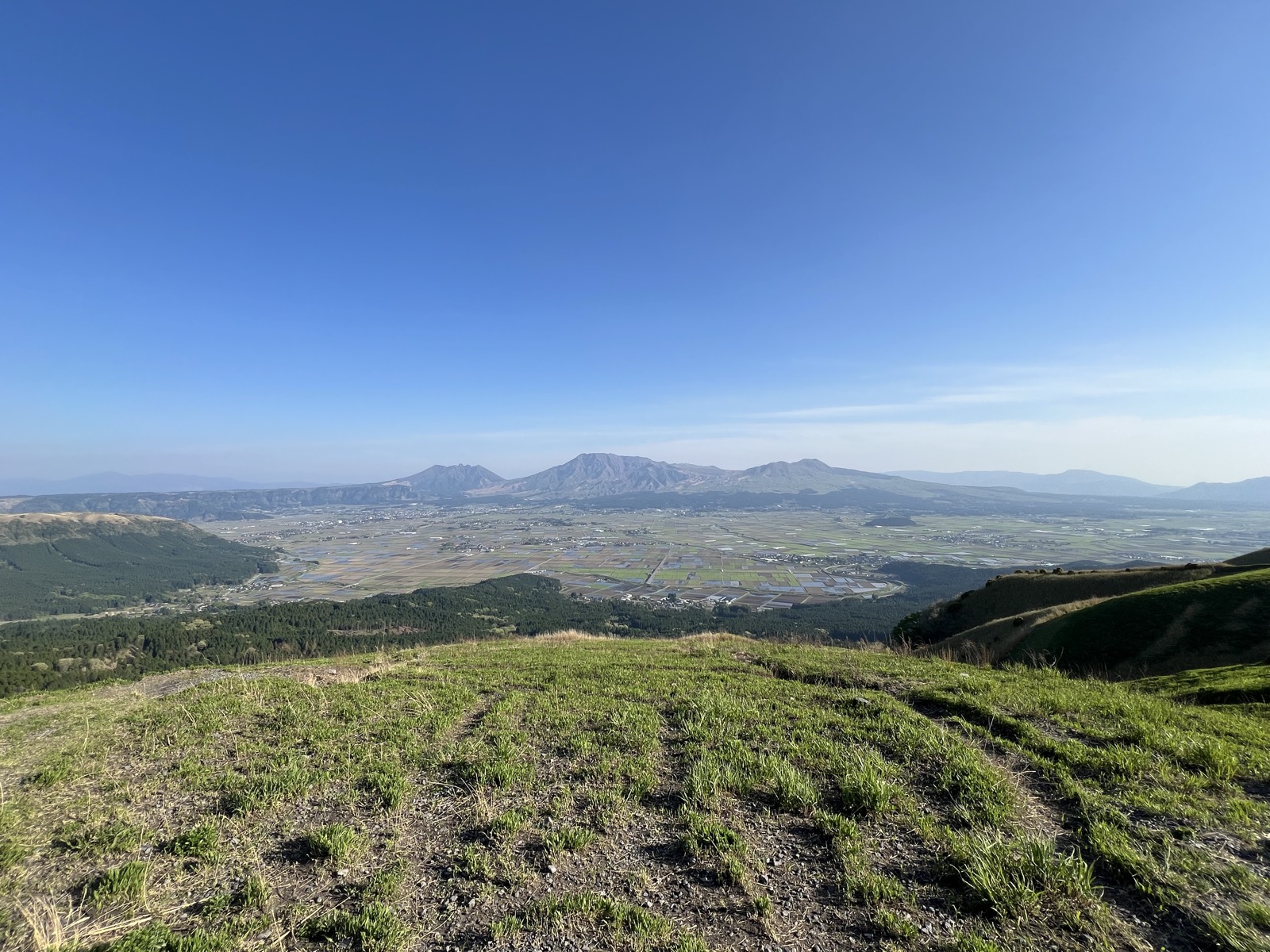
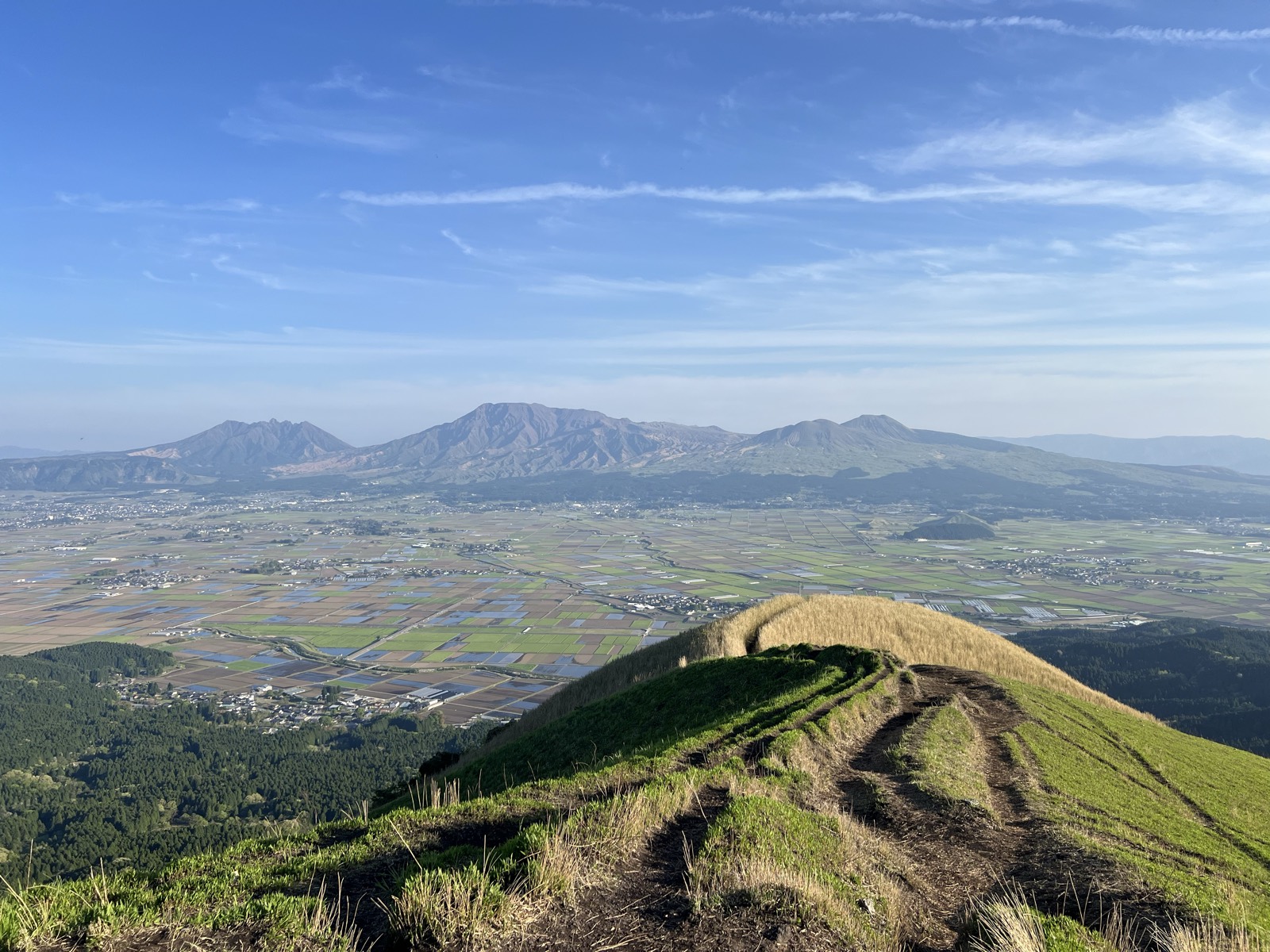
Very scenic. Not much more to say about it. The photos do the work.
Takachiho Gorge
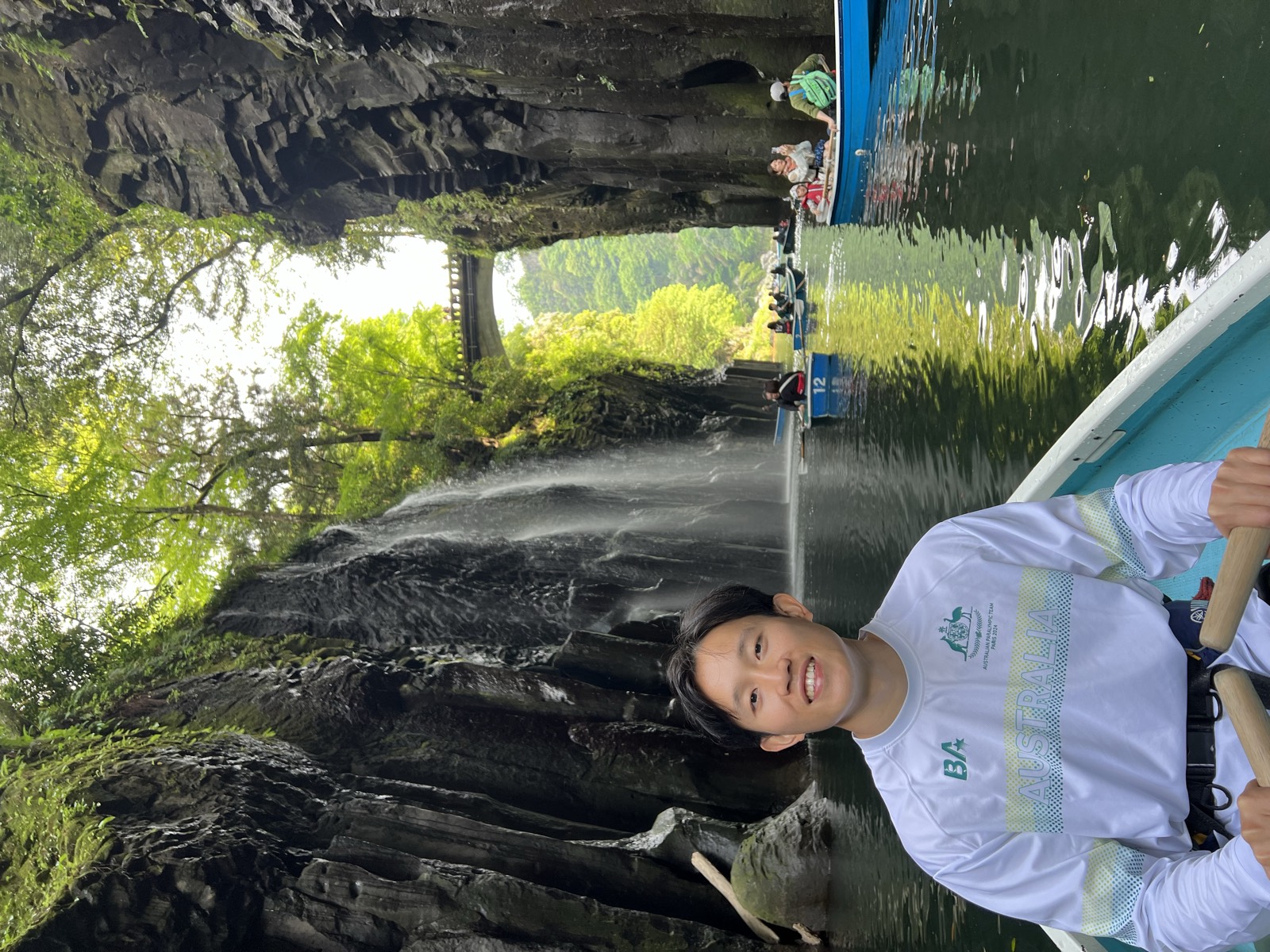
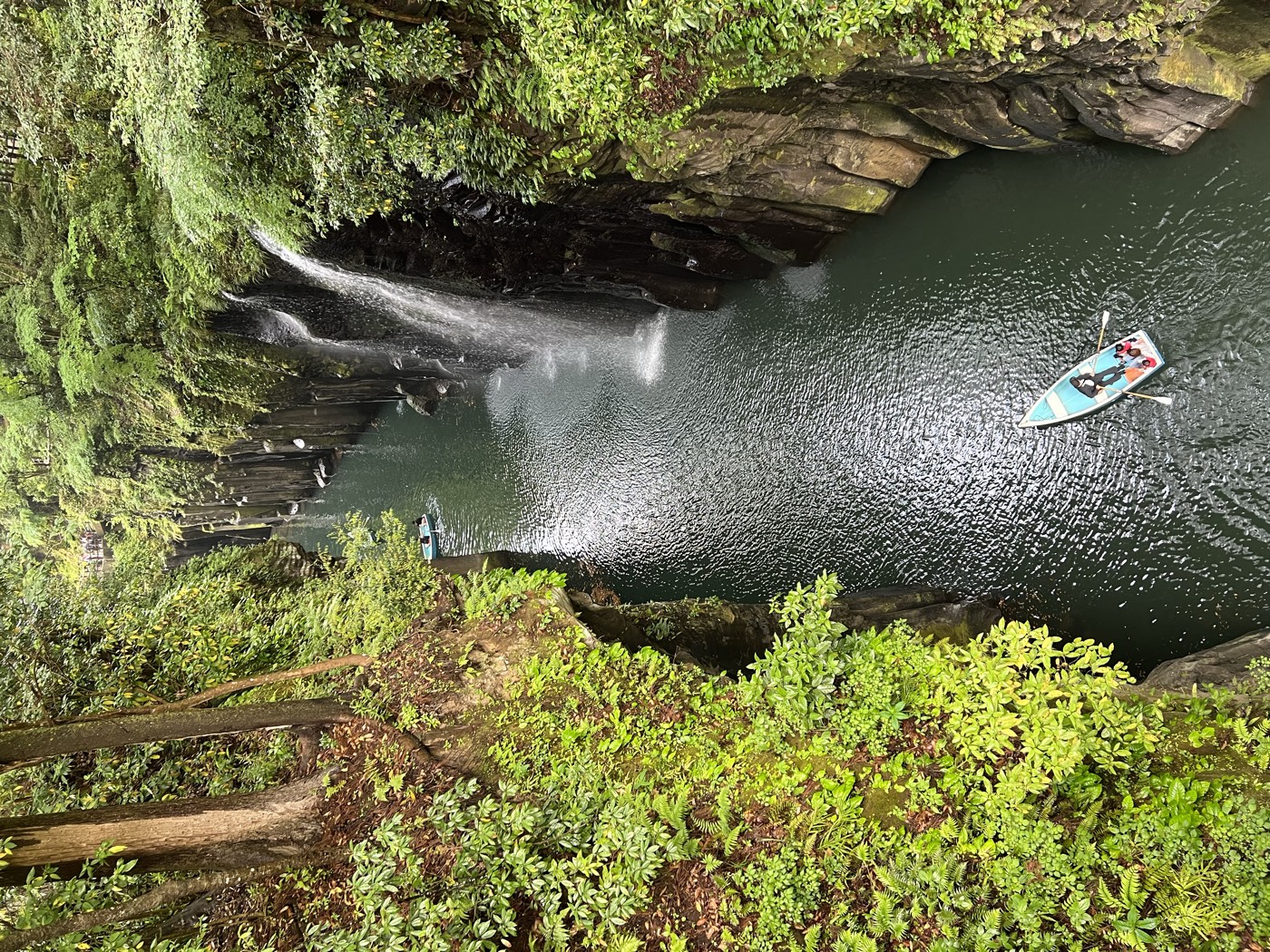
We stopped at Takachiho Gorge on the drive from Aso to Beppu. It was, at first glance, very crowded. Clearly it's a social media sensation. That's how I'd heard about it in the first place. Once we got into a rowboat I think it was well worth the experience, although it was shorter than expected.
It's beautiful, but it feels a bit like an amusement park ride. You get in, get 30 minutes of fun, and then you're supposed to get out and let the next person in. Very controlled, like most tourist activities in Japan. Don't go expecting a quiet, contemplative paddle. Go expecting a managed slot and a great view.
Beppu: hot springs and the Hells (3 nights)
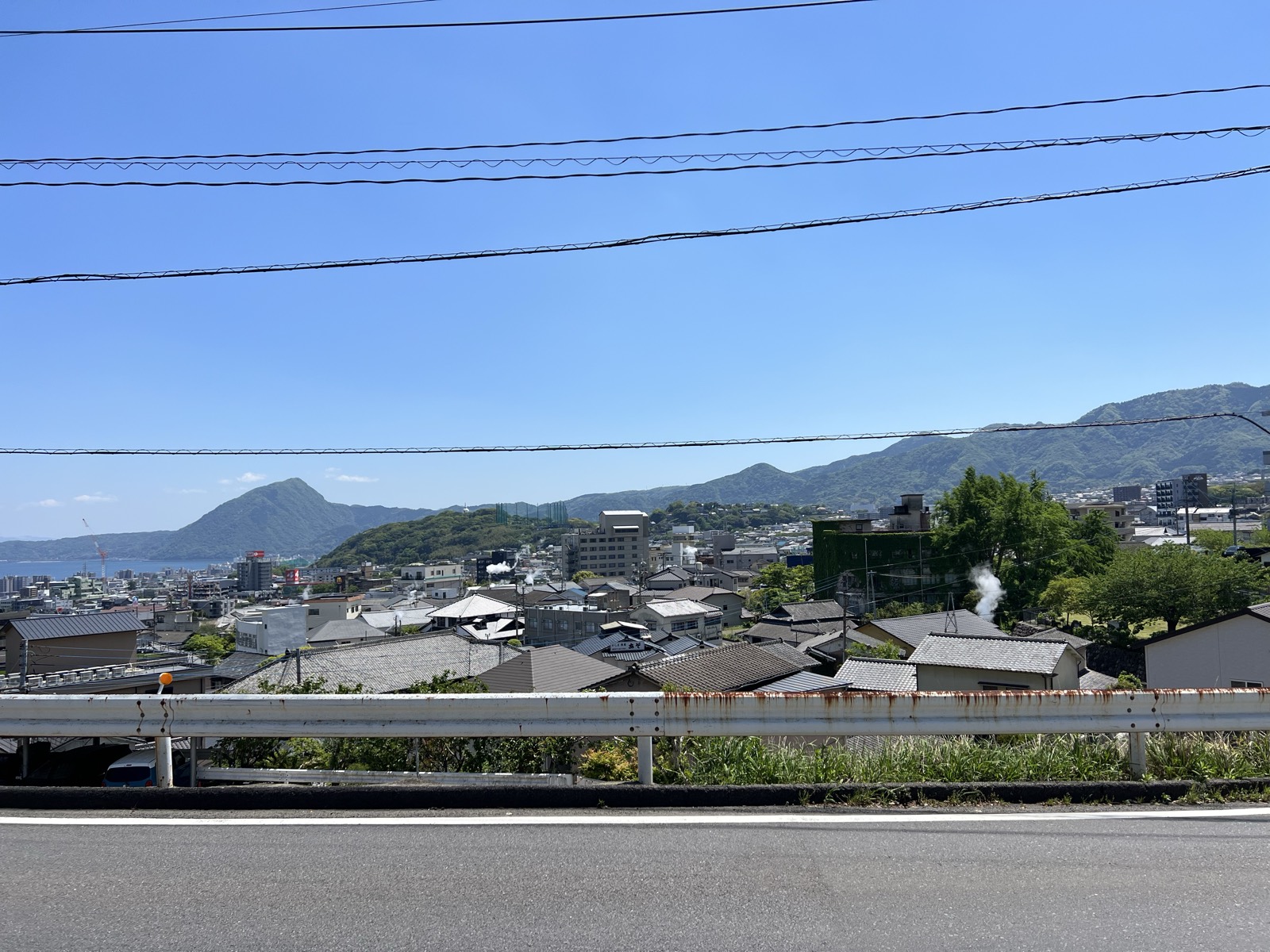
Beppu is a touristy town built around the thing it is famous for: hot springs. We stayed three nights at a Simple Stay Airbnb ($418.79).
The whole town smelled of sulfur. If you don't know that smell, think eggs. It followed us everywhere. It was also quaint in its own way. Thick white clouds of steam rose above the town from the onsens we kept walking past.
Beppu Hells (Beppu Jigoku)
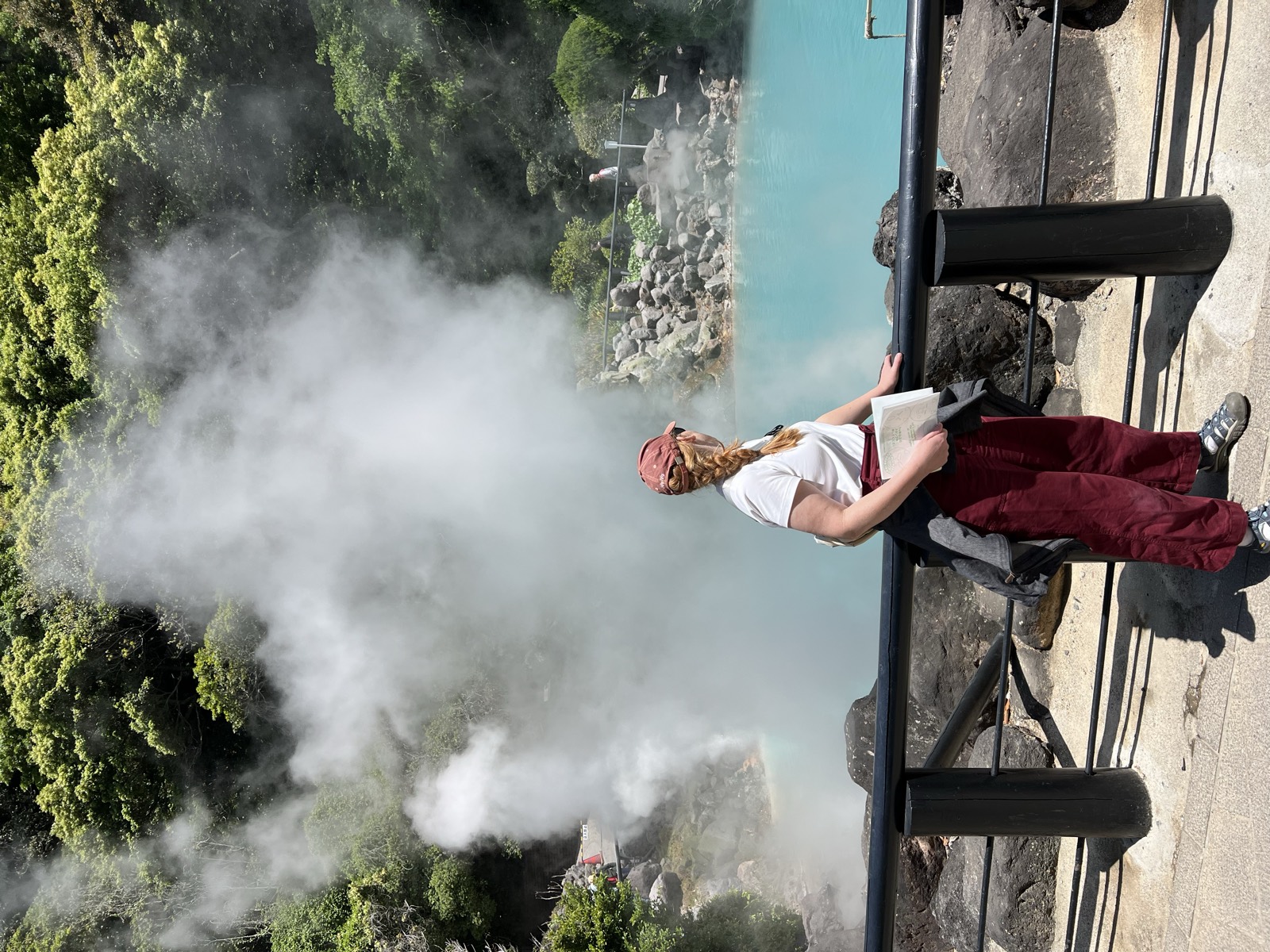
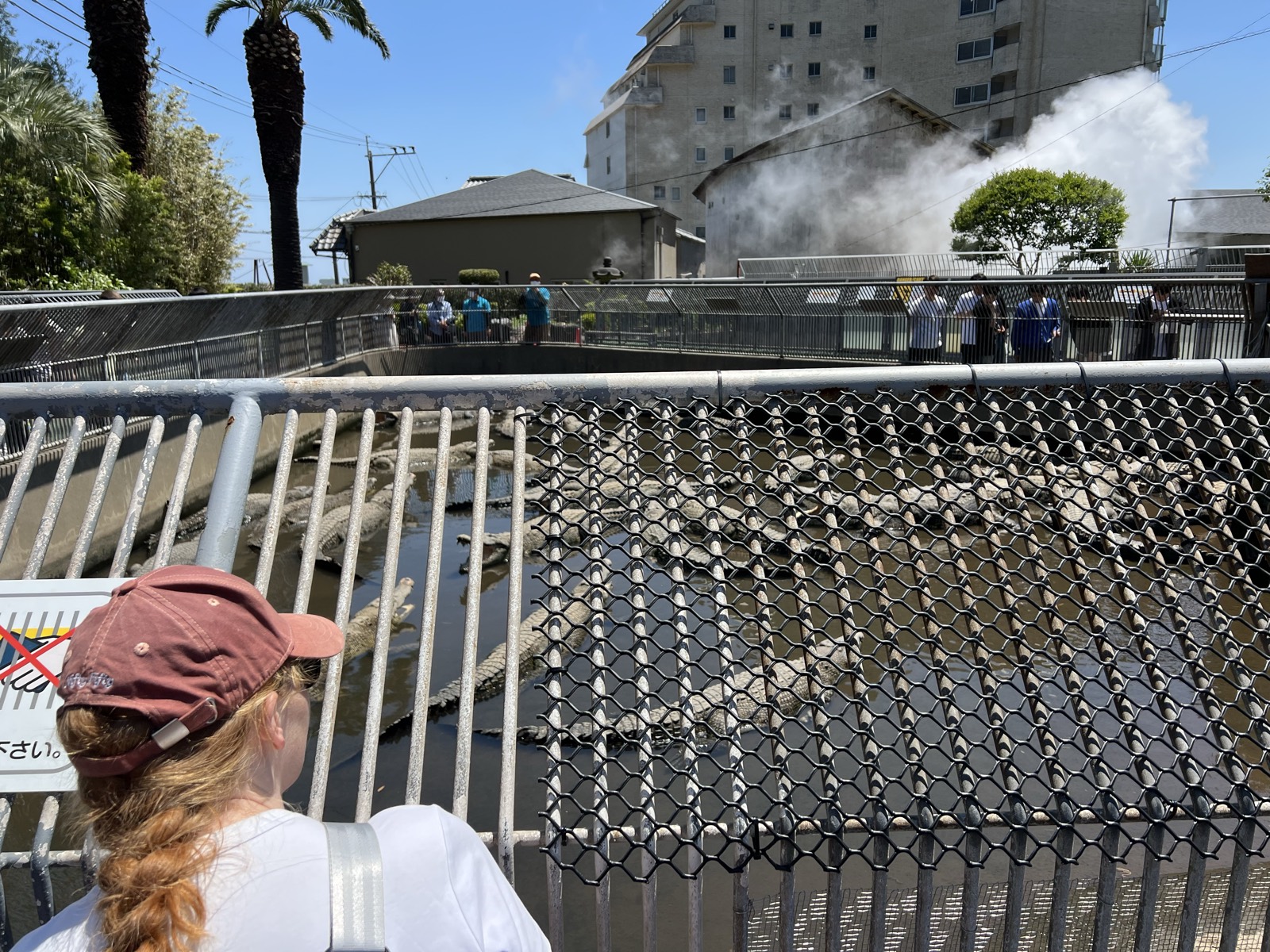
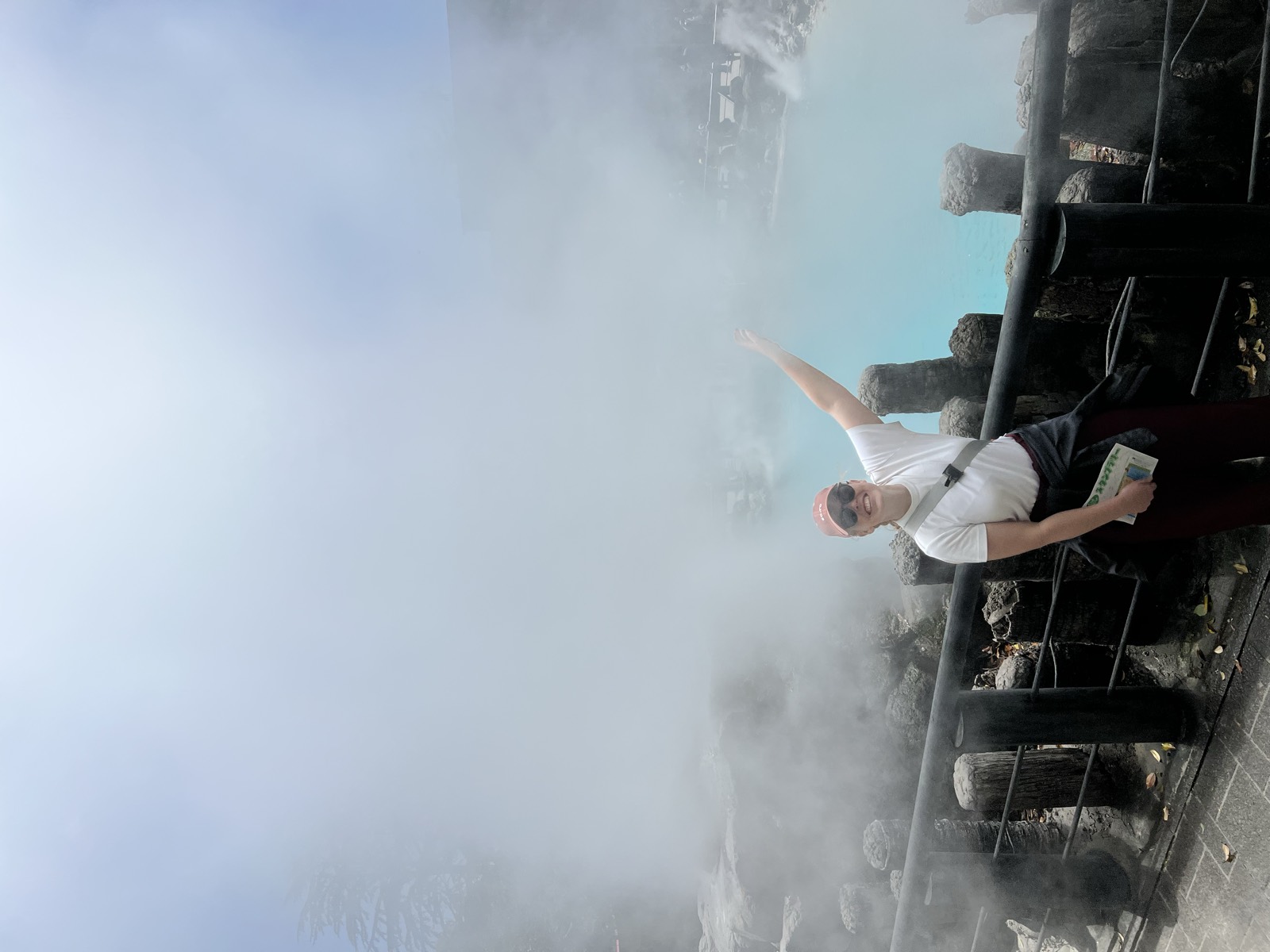
I won't go into detail on the Seven Hells of Beppu. There are plenty of guides on them already. They are a series of springs, each with its own "theme", and they sit close together. You can walk between them or take a bus.
My opinion: I didn't like the structured, theme park feel. It felt like most people were there to take a photo and move on. It is a good stop for families, though. Most of the hells are accessible and kid-friendly, and children can run around and be awed by each one.
What stood out to me was how different each hell is. You never know what to expect. I'll give you one hint if you haven't read about them: one of the hells is very "prehistoric".
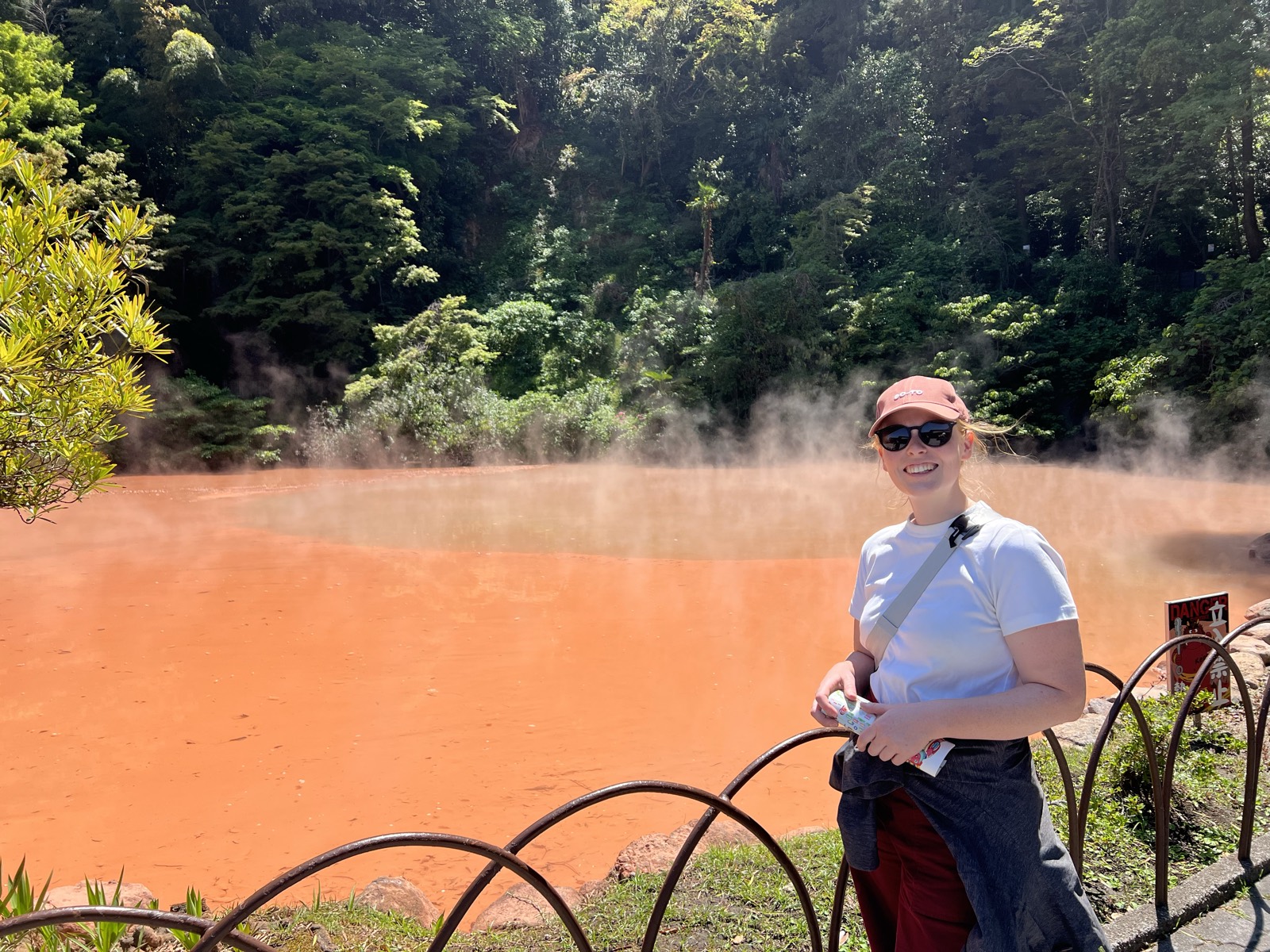
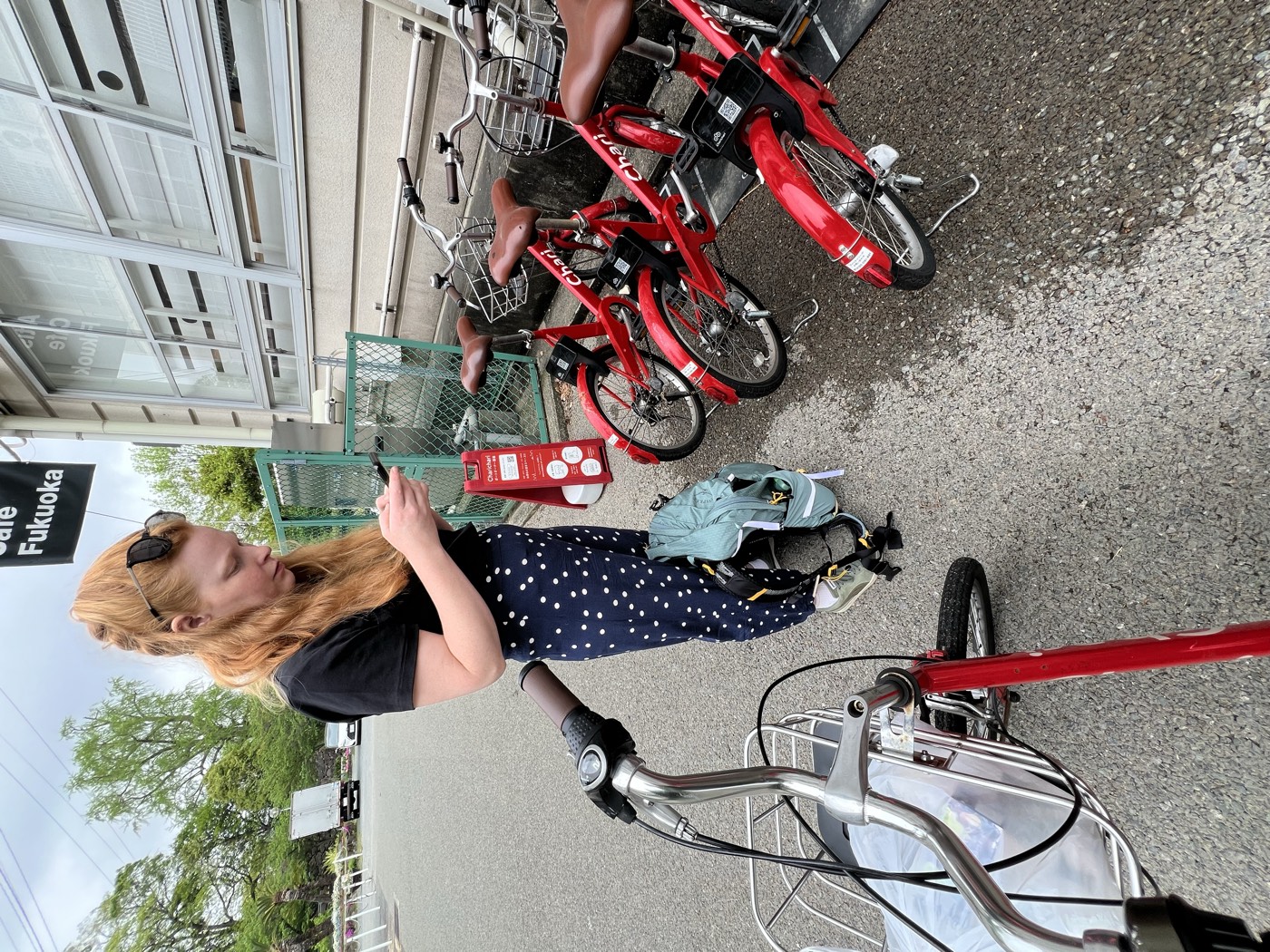
Getting around by bicycle
We explored the rest of town on bicycles, and I think it is the best way to do it. We hired them through an app called ChariChari. The bikes are stowed at set spots you can find in the app. The spots are convenient, and the bikes were usually cheaper than public transport.
Back to Fukuoka
Then we were back where we started, in the city where we first landed. There is not much to report here. We were tired and ready to go home.
It was a relief to hand the car keys back. The car had damage, so we paid the excess and left. I filed the insurance claim soon after. The claim went through after a few hoops. See the insurance section of the guide.
What next?
Planning your own trip? The Kyushu road trip guide covers car rental, insurance, tolls, parking, and what the trip cost us in total.